GM targets development costs with commercial vehicle ECM
GM says its new controller shortcuts the most technical, least differentiated stretch of a commercial vehicle program: getting a foreign engine to turn fuel to noise. The post GM targets development costs with commercial vehicle ECM appeared first on FreightWaves .
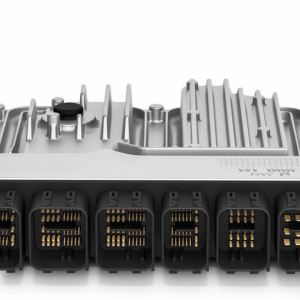
General Motors (GM) is targeting development costs for commercial vehicles by introducing a commercial vehicle Electronic Control Module (ECM) built for its 6.6-liter heavy-duty gas engine. The module, announced at ACT Expo, is designed as a ready-to-run testing package with a GM-approved base engine calibration already loaded. This approach aims to save time and resources for integrators, upfitters, and fleets specializing in step vans, work trucks, and last-mile delivery vehicles.
The ECM package was developed based on customer feedback, which highlighted the engine integration as the most challenging and least differentiated part of the program. GM's technical specialist and on-highway lead application engineer, Anthony Locano, explained that the package serves as a foundational starting point, rather than a certified product. This approach allows customers to save significant time during the initial development phase, as they can start with a running engine rather than a dead one.
The controller, which is new for external customers, can be tailored to add content for specific vehicle-related features or functionality. However, this capability only applies to external customers, as the package is not a certified product. Locano emphasized that the ECM can interact with various vehicle hardware, such as different exhaust and air induction systems, making it adaptable to various applications.
GM's approach is centered around leveraging high-volume production, enabling them to sell the package to integrators, upfitters, and fleets who require a running engine for testing and certification purposes. This shift allows customers to save time and resources in the initial development phase, ultimately accelerating the integration process for commercial vehicles.
Written by urgent.news from FreightWaves's reporting — not their text. Machine-written — may contain errors; check the original before relying on it.