China’s robot games evolve from science fair to strategic showcase
China initiated its five-day World Humanoid Robot Games in Beijing on Saturday, transforming the event into a display of commercial technology and a field deemed strategically vital by the government, according to Reuters. Dubbed the "Robot Olympics," the competition sees robots competing in physical contests and practical assignments.
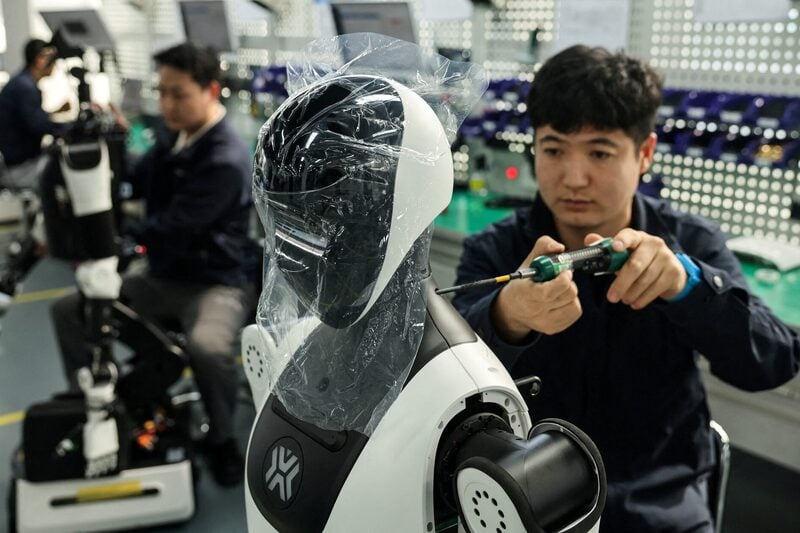
This year, the robots' performance will be evaluated based on the precision and swiftness of their hands as they execute tasks like screw tightening, bottle opening, and bead collection with tweezers. These challenges underscore the sector's most formidable engineering hurdle: crafting robotic hands that match human dexterity and touch.
Moreover, they highlight mounting pressure on firms to demonstrate that humanoid prototypes can execute practical functions beyond controlled exhibitions. China's robotics contests commenced as modest gatherings involving university teams and enthusiasts. Initial machines comprised wheeled robots engaged in simplified football using limited pre-programmed automation.
The industry gained national prominence in 2015 after President Xi Jinping referred to robotics as the "crown jewel" of advanced manufacturing. Beijing hosted its inaugural World Robot Conference the following year, solidifying the sector's status as a government priority. By 2023, the conference had evolved into a major arena for commercial products.
Xiaomi Corp.'s Cyberdog garnered attention with a launch price of around $1,500, in contrast to Boston Dynamics' Spot robot, which costs over $75,000. Humanoid performance has surged significantly since Beijing's inaugural robot half-marathon in April 2025, during which numerous machines faltered, collided with obstacles, or failed to complete the course.
At the 2026 race, an impressive 47 out of more than 100 teams successfully crossed the finish line, as reported by state media. Unitree H1 completed the course autonomously without an accompanying engineer, while Honor's autonomous Flash humanoid finished the race in 50 minutes and 26 seconds. Analysts and executives attribute these advancements to China's burgeoning robotics supply chain, decreasing component costs, and government backing.
The commercial test lies in whether manufacturers can convert enhancements in mobility and dexterity into dependable machines for factories, warehouses, and other workplaces.
Written by urgent.news from Investing.com's reporting — not their text. Machine-written — may contain errors; check the original before relying on it.