Canada sinks retired Boeing 737 off Vancouver Island to create artificial reef
In an innovative environmental initiative, a Boeing 737 from Canadian Airlines has been transformed into an artificial reef off the coast of Chemainus, British Columbia. Sunk in 2006, this aircraft has undergone a thorough cleaning by dedicated volunteers before its descent. Now known as Xihwu Reef, it has become a thriving ecosystem, supporting over a hundred different marine species that…
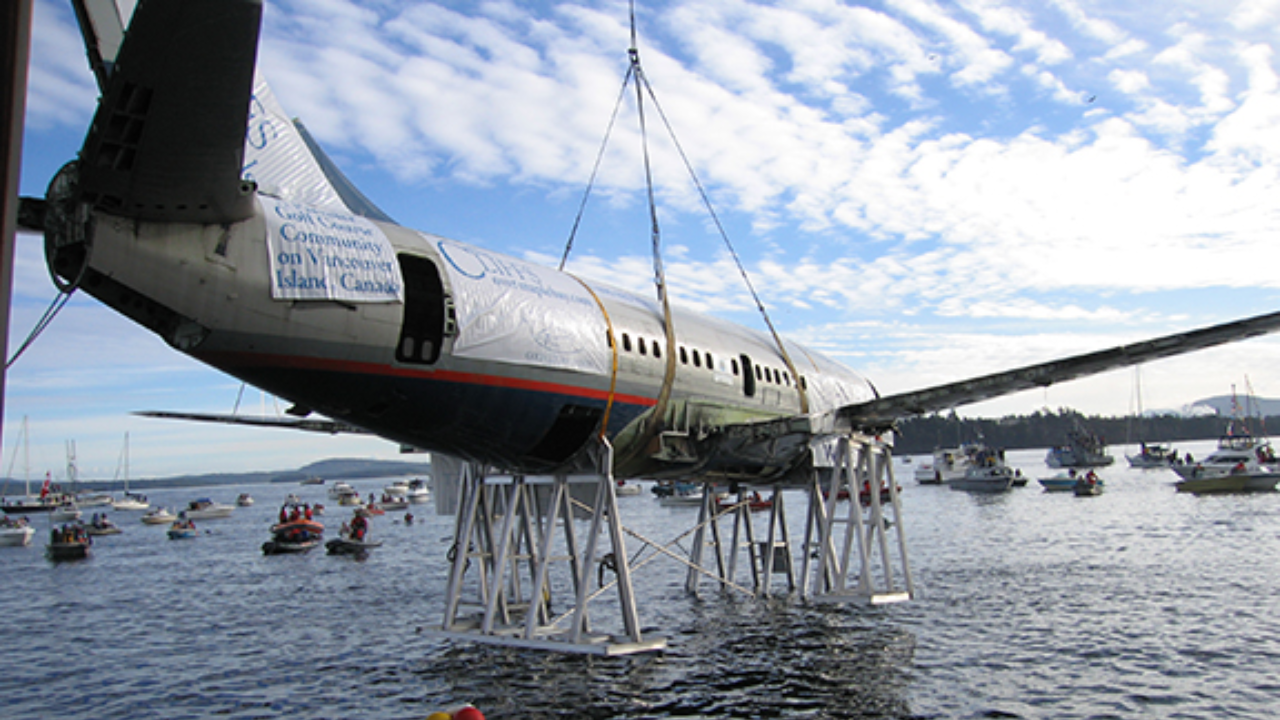
A retired Boeing 737 aircraft from Canada's former Canadian Airlines fleet now serves as an artificial reef off Vancouver Island. The 100-foot jet, decommissioned due to age and structural issues, was stripped of usable components and donated to the Argo Reef Society of British Columbia (ARSBC). It was sunk near Chemainus, BC, on January 14, 2006.
The jet, known as Xihuw, was donated by Qwest Airparts of Memphis, Tennessee, through Air Canada's efforts. The name "Xihuw" is derived from the Hul qumi num word for red sea urchins, a species that once thrived in the waters but has since dwindled due to pollution and over-fishing.
The sinking process began in November 2002 when Air Canada's Fraser MacLean contacted the ARSBC, proposing the idea. The aircraft, weighing 15 tonnes and measuring 30 meters long, took nearly four years to prepare. Local volunteers spent hundreds of hours cleaning the fuselage to ensure it posed no toxic threat to the marine environment.
Located in the Georgia Strait off Chemainus, about 70 kilometers north of Victoria, the Xihuw Reef was chosen for its location in a region with minimal marine life, affected by decades of forest industry debris. The site was approved by Environment Canada and six local First Nations.
Today, the Xihuw Reef is home to over a hundred documented species, including rockfish, lingcod, juvenile fish, cloud sponges, plumose anemones, feather stars, octopuses, and red sea urchins. Divers can explore the cabin and cargo holds, as well as the cockpit, where small rockfish often gather. A memorial plaque and a carved wooden mask are also part of the site's features.
The Boeing 737 stands as a unique example of a decommissioned airliner finding a new purpose, providing an ecosystem beneath the waves. It remains a popular destination for divers, offering an alternative to the more common artificial reefs found in the region.
Written by urgent.news from Times of India's reporting — not their text. Machine-written — may contain errors; check the original before relying on it.