What Asia’s Industrialization Lessons Can Teach Fragmented States
Political differences do not have to disappear before economic interdependence can deepen.
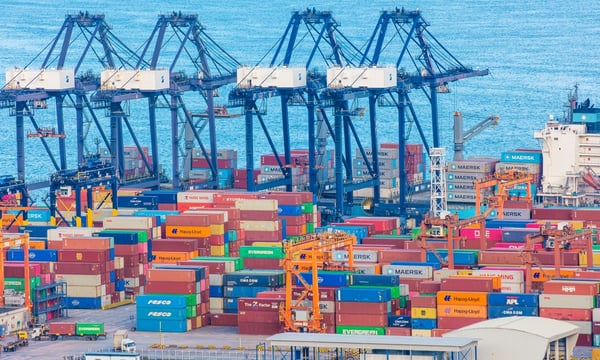
In Asia, economic transformation often focuses on impressive statistics, like China's rise as a manufacturing hub or South Korea's technology prowess. However, the story behind this growth lies in the interconnected infrastructure that emerged over decades, spanning factories, ports, roads, financial institutions, and supply chains.
This integration created a more unified economic geography than the fragmented political landscape. Despite political differences among nations like China, Japan, India, and Southeast Asian countries, economic ties persisted, driven by trade, cross-border investment, and production networks.
The Asian Development Bank highlights trade as the primary driver of regional integration, with deep and sustained commercial ties. This economic interdependence implies that political uncertainty or disruptions can have severe economic consequences, particularly when supply chains are affected or trade policies change abruptly.
Prosperity hinges on policy stability, alongside functioning ports, reliable energy, and predictable access to markets. As integration deepens, various stakeholders gain a stake in maintaining these connections, leading to material benefits even when political agreement is incomplete.
This concept can be applied to countries with political fragmentation, such as Libya, where economic fragmentation exists. Libya's economy heavily relies on hydrocarbons, accounting for 65% of its GDP, 93% of exports, and 72% of government revenues in 2024. This dependence has generated wealth but not the extensive domestic production networks found in industrial economies.
Extracting and exporting oil does not necessitate a network of local manufacturers, engineering firms, suppliers, or technical specialists. To achieve industrialization, Libya must develop projects like the 8.1 million-ton direct-reduced-iron (DRI) complex in Benghazi, a joint venture between Turkish steelmaker Tosyalı and the Libya United Steel Company for Iron and Steel Industry.
The success of such projects depends on whether Libyan companies become suppliers, local workers acquire industrial skills, and engineering, logistics, and maintenance businesses grow around the project. Steel can support construction, infrastructure, and manufacturing, potentially becoming part of a broader economic network. Ahmed Gadalla, the project's chairman, emphasizes the potential for local businesses and further investment in Libya, extending beyond the initial Tosyalı-SULB venture.
Vietnam offers another example, where foreign investment has increased manufacturing capacity, but local business participation in global supply chains has decreased. While foreign capital and technology can accelerate industrialization, the goal should be to develop local capabilities around them, ensuring that a successful project leaves behind suppliers, engineers, technicians, and entrepreneurs who can participate in future projects.
Moreover, geographical connectivity is crucial; Benghazi's industrialization should be linked to existing industrial hubs like Misrata, with various stakeholders benefiting from economic ties across the country.
Written by urgent.news from The Diplomat's reporting — not their text. Machine-written — may contain errors; check the original before relying on it.