Wall Street rises on the day but falls for the week as bond yields, Iran in focus
The S&P 500 and the tech-heavy Nasdaq snap three-week winning streaks, while the Dow registers its second consecutive weekly loss.
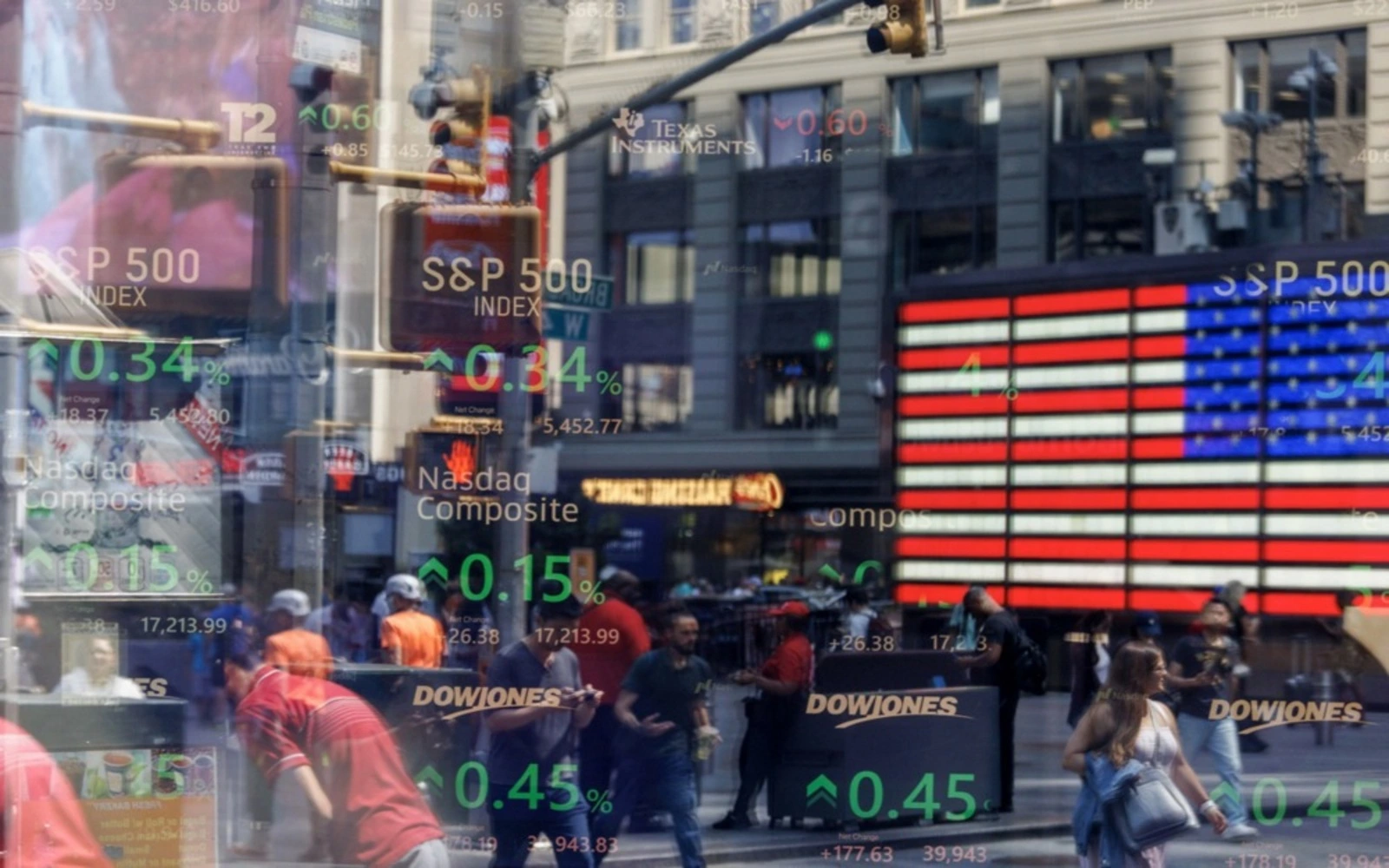
The main US stock indexes saw a mixed performance on Friday, ending higher but showing declines for the week, as investors grappled with fluctuating government bond yields and uncertainty surrounding developments in the Middle East. The S&P 500 and Nasdaq tech-heavy index both ended lower for the week, while the Dow Jones Industrial Average registered its second consecutive weekly loss.
Investors have been tracking the direction of US government bond yields closely, as higher borrowing costs have dampened risk appetite. The week started with a lower bond yield environment, leading to positive sentiment for equities. However, a Treasury Department announcement on Wednesday revealed that the government would spend double the expected amount on bond buybacks, causing bond yields to rise and dampening equity gains.
Chris Zaccarelli, chief investment officer at Northlight Asset Management, noted that Friday appeared calmer compared to the tumultuous week on Wall Street. The week featured a seesaw trading pattern, with equity investors worried about rising yields. The Treasury Department's announcement helped alleviate some of these concerns.
Positive economic data also helped ease investor worries. The US services sector experienced its strongest growth in nearly two years in August, leading to a significant acceleration in overall business activity. This growth momentum offset a slowdown in the manufacturing sector, which was hindered by reduced stock building and supply disruptions arising from the conflict in Iran.
Higher oil prices added to inflation concerns. Brent futures gained 6.39% and US crude rose 5.66% for the week, while the Dow Jones Industrial Average increased by 0.98% to 53,277.01, the S&P 500 rose by 0.43% to 7,674.37, and the Nasdaq Composite climbed by 0.44% to 26,180.46. The week ended with the S&P 500 down 1.43%, the Nasdaq down 2.05%, and the Dow down 0.85%.
Small-cap stocks, represented by the Russell 2000 index, also suffered the week's steepest decline, marking the largest drop since the week of June 1. Among the S&P 500's 11 major industry sectors, most saw gains on Friday, with materials leading the charge at 2.2%, followed by healthcare at 1.3% and financial stocks at 1%. Utilities were the biggest loser, falling 2.3%.
Individual stocks also contributed to Friday's gains. Ross Stores reported better-than-expected quarterly results and raised its annual profit forecasts, leading to a 4.4% increase in stock price. Robinhood and Coinbase Global experienced impressive gains of 13.7% and 8.2%, respectively, as crypto-related investments surged. Bitcoin prices surged 6.4% and hit their highest levels since mid-May.
Looking ahead, investor attention will focus on the quarterly results of AI chip leader Nvidia and software companies including Intuit, Salesforce, and CrowdStrike. Additionally, July's Personal Consumption Expenditures price index, the Federal Reserve's preferred inflation gauge, will be released, along with speeches by Fed Chair Kevin Warsh at the Jackson Hole symposium at the end of next week.
Written by urgent.news from Free Malaysia Today's reporting — not their text. Machine-written — may contain errors; check the original before relying on it.
This story
This is one outlet's version. Read the fullest account.
- Wall Street rises on the day but falls for the week as bond yields, Iran in focus freemalaysiatoday.com
- Wall St rises on the day but falls for the week; bond yields and Iran in focus straitstimes.com
- Wall Street rises as materials and crypto stocks offset continued bond sell-off investing.com
- Wall Street has an answer to 60/40 — this ETF crams 90/60 into the same dollar: One Big Investment Idea finance.yahoo.com