Versorgungssicherheit: Sind die Gasspeicher halb voll oder halb leer?
Die Gas-Großhandelspreise steigen wegen des Iran-Kriegs deutlich. Wie sich das auf die Füllstände der Speicher und die Energieversorgung auswirkt.
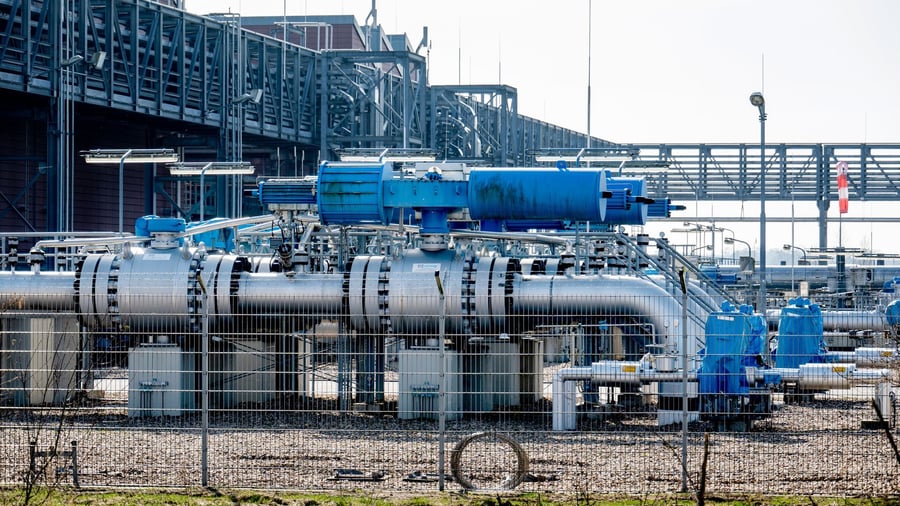
During the summer, large retailers purchase natural gas at a lower price and store it, later selling it at a profit during the winter months. Over time, the storage facilities fill up almost by themselves - and empty out again. Currently, prices are very high due to the Iran war, making storage not attractive. As a result, the storage levels are significantly lower than usual for this time of year.
The extent of this issue is a topic of discussion. The current level of German gas storage is 50.2%, which is the lowest level for this time of year since records began in 2011, according to the Gas Storage Industry Association Ines. This represents a historic low. Regulations stipulate that German gas storage should be filled to about 70% by November 1st and 30% by February 1st, with some storage sites requiring 40%.
Currently, about 74% of the storage capacity belonging to gas wholesalers is booked. If it becomes clear that these reserves are not being used, storage operators must release unused storage capacity to the Market Sector Responder (THE), a company responsible for the gas market organization in Germany. In extreme cases, THE would buy and store gas on behalf of the state, as it did in 2022.
A gas shortage in the coming winter is not expected, but the situation is less comfortable than in the past two winters. Geopolitical developments and exceptional weather or infrastructure scenarios could lead to additional stresses. The ministry is therefore closely monitoring the development of storage levels, import volumes, and international markets.
The high price of gas in wholesale markets is due to the Iran war. The Hormuz Strait, important for the world trade in liquefied natural gas (LNG), is currently closed. Although the conflict is not expected to end soon, global demand for gas is driving up prices. The gas market operates like that of any freely traded goods: producers sell natural gas to large distributors, who import it into Germany and further sell it to municipalities and other energy providers.
Households then enter into normal supply contracts with these companies. Major corporate customers often also have direct supply contracts with large distributors like Uniper. Gas is imported into Germany primarily from Norway (44%), followed by the Netherlands (24%) and Belgium (21%) as transit countries. Around ten percent of natural gas imports come through German import terminals, almost all of which come from the US, the world's largest LNG producer.
Germany also produces natural gas, but in comparatively small amounts. The safety of these supply routes is a critical issue. Green party energy spokesman Michael Kellner fears that Economy Minister Katherina Reiche is driving the country deeper into dependence on the US and its unpredictable President Donald Trump. "That's no good idea," he told the German Press Agency in Berlin.
"Extreme risks are not to be ruled out. Last winter, a terminal failed because the Baltic Sea was frozen and icebreakers were unavailable." Kellner also emphasized the growing danger of terrorist attacks on infrastructure and supply routes. The market remains disrupted, and storage levels are too low. This could become costly for Germany.
Kellner suggested that the minister convene a summit with supply companies and work to expedite the filling of gas storage facilities.
Written by urgent.news from Handelsblatt's reporting — not their text. Machine-written — may contain errors; check the original before relying on it.