Trumps Zollchaos: Was nach einem Jahr vom EU-US-Zolldeal geblieben ist
Vor einem Jahr folgte nach wochenlangem Ringen um Detailfragen die gemeinsame Erklärung zwischen der EU und den USA zum bilateralen Handelsabkommen. Doch nicht jeder ist davon begeistert.
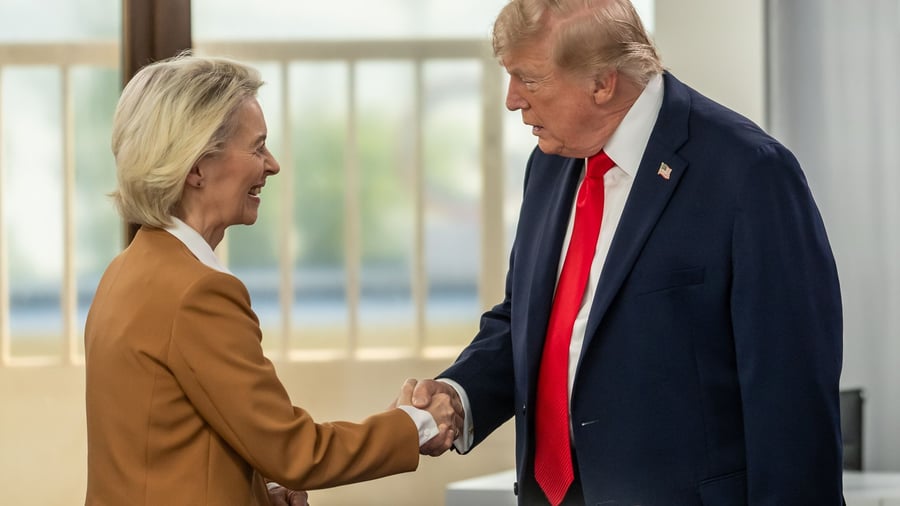
Donald Trump, former US President, and EU Commission President Ursula von der Leyen reached a trade deal in Turnberry, Scotland, in July 2025, ending a month-long dispute. The agreement set a maximum tariff of 15%, or a "Zollobergrenze," on most European goods entering the US. The EU conceded by eliminating tariffs on US industrial goods.
If the US failed to fulfill its commitments, the EU could suspend its concessions. Currently, a pauschal (flat) tariff of 10% is applied to most EU imports into the US, as per a EU Commission spokesperson. This lower rate results from Trump's recent decision to impose additional tariffs on countries with poor labor practices, affecting the EU at 10%.
The EU Commission states that EU exports benefit from more favorable or equal regulations under the new rules. Additionally, EU-import exemptions like for cork, diamonds, aircraft parts, generics, and active substances will resume. Experts, including the Federal Association of German Industry (BDI), view the deal with mixed feelings.
While the BDI acknowledges that the US largely complied with the 15% ceiling, it laments the lack of resolution for high steel and aluminum tariffs, as well as 25% rates on certain truck imports. Moreover, the BDI criticizes the 'very high additional US tariffs on European passenger cars,' which remain at 15% since Trump's term began.
Written by urgent.news from Handelsblatt's reporting — not their text. Machine-written — may contain errors; check the original before relying on it.
This story
This is one outlet's version. Read the fullest account.
- Iran war: What is behind Trump's threat of an economic war? handelsblatt.com