These ‘Extremely Rare’ 17th-Century Drawings Were Astonishingly Well-Preserved. Now They Are on Display for the First Time in Nearly a Century
Amsterdam’s Rijksmuseum acquired the drawing book, which has artwork attributed to Rombout Uylenburgh, a celebrated 17th-century Dutch painter whose legacy later fell into obscurity
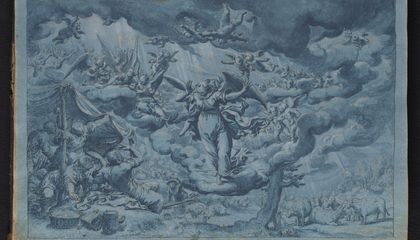
A rare 17th-century drawing book now on display at Amsterdam's Rijksmuseum has astonished visitors with its remarkably well-preserved illustrations, which have been brought into public view for the first time in nearly a century. The exhibition, lasting three months, is made possible by the Van Eeghen family, who have a deep history of arts-related philanthropy. For over 300 years, the family owned the book, which contains approximately 30 full-page drawings attributed to Rombout Uylenburgh.
The drawings, executed on blue paper, have retained their vivid colors due to limited exposure to light over the centuries. The book's original owner, Reyer Claesz., was a Mennonite merchant from Amsterdam who was familiar with Uylenburgh, as evidenced by the gold letters on the book's binding that state "Art book for Reyer Claessoon (Claesz)." The Van Eeghen family's ties to Amsterdam's Mennonite community likely contributed to the book's preservation in their possession for generations.
Rombout Uylenburgh, born around 1580 in the Dutch city of Leeuwarden, moved to Kraków, Poland, where he developed his artistic skills and became a royal court painter under Sigismund III. He later moved to Danzig (now Gdańsk), where he gained a reputation for grisailles, monochromatic paintings typically executed in shades of gray. The purpose of the drawing book remains uncertain, as does how it came into the Van Eeghen family's possession.
The book's significance lies in its intact state, which allows historians to study its illustrations and gain a deeper understanding of Uylenburgh's life, artistic techniques, and workshop. With only a small number of Uylenburgh's paintings surviving, the drawing book provides a unique opportunity for researchers to learn more about this intriguing artist. This exhibition marks the first time the book has been accessible to the public since 1935, when it was displayed at Amsterdam's Museum Fodor.
Written by urgent.news from Smithsonian's reporting — not their text. Machine-written — may contain errors; check the original before relying on it.