Steve Rosenberg: Shortage of petrol but not patriotism as Russians feel growing impact of war
Drivers are waiting hours in fuel queues, as Moscow prepares to celebrate Russian Flag Day.
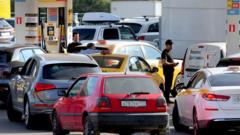
In a petrol station on the outskirts of Moscow, Svyatoslav had been waiting for two hours to fill his car. The station had just updated its sign to indicate there was no fuel available, though they could not confirm when it would be restocked. Svyatoslav explained that he lacked enough fuel to travel to another station. Across Moscow, long queues for petrol had become commonplace, a result of unscheduled repairs at oil refineries due to Ukrainian drone strikes on Russian oil facilities. These strikes have persisted, exacerbating fuel shortages.
The situation has strained Russia's ability to manage refining capacity and logistics. The second wave of the fuel crisis is reportedly building, according to the newspaper Nezavisimaya Gazeta. In Moscow, one could count 80 vehicles in a single line at a petrol station. Elizaveta, waiting in the queue, noted that she had reached the front of the line by midnight, only to find the station closed until 2am. Lyubov, who had driven into Moscow from the provinces, observed empty petrol stations en route.
To cope with the long queues, Lyubov stroked her pet dog Agatha. Many expressed a sense of countrywide difficulty, attributing it to the Ukrainian invasion of 2022, which saw no drone attacks on Russian oil refineries before. The Kremlin continues its "special military operation" in Ukraine, despite the ongoing attacks. To mitigate the crisis, Russia began importing petrol and temporarily permitted the production and sale of lower-grade petrol, such as Euro 2, which contains up to 50 times more sulfur than modern Euro 5 and poses potential damage to modern cars.
While the Kremlin acknowledged the impact of attacks on industrial facilities and infrastructure on Russians, President Vladimir Putin downplayed the severity, stating that there were no critical consequences. However, independent columnist Andrei Kolesnikov from Novaya Gazeta criticized this perspective, suggesting it was a self-deception to maintain a false sense of stability. Recent polls indicate growing anxiety among Russians, contradicting the government's message of calm and resolve.
Amidst the fuel crisis, patriotic displays continued. Russian Flag Day was celebrated with long queues for petrol and festive events. Despite the petrol shortage, patriotism seemed to provide solace, with volunteers distributing Russian flags and speakers extolling the country's strength and future. The connection between the war and the fuel crisis was evident, as Russians grappled with the realities of their country's involvement in the conflict.
Written by urgent.news from BBC News's reporting — not their text. Machine-written — may contain errors; check the original before relying on it.
This story
This is one outlet's version. Read the fullest account.
- Rosenberg: Shortage of petrol but not patriotism as Russians feel growing impact of war adomonline.com
- Rosenberg: Shortage of petrol but not patriotism as Russians feel growing impact of war myjoyonline.com
- Rosenberg: Shortage of petrol but not patriotism as Russians feel growing impact of war bbc.co.uk