Rüstung: „Die Tötungskette verkürzen“ – Was der Krieg der Zukunft für Deutschlands Rüstungspläne bedeutet
Rasante Fortschritte bei KI und Drohnen verändern die Logik des Krieges. Doch Deutschland rüstet noch klassisch auf. Dabei gibt es alle Voraussetzungen für eine Hightech-Armee.
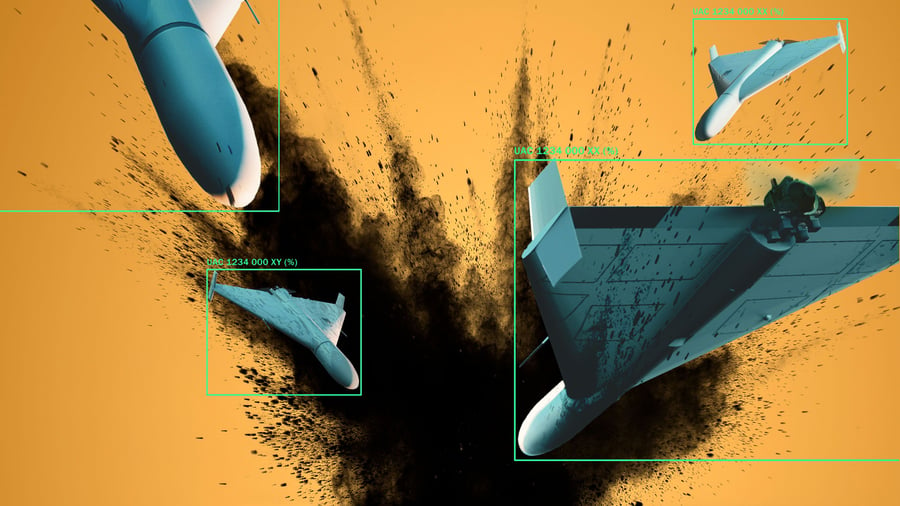
The future of warfare, with its rapid changes brought by artificial intelligence and drones, is reshaping Germany's defense plans. However, the Wehrmacht still relies on more traditional methods. Crucial elements in this new era include unmanned systems, deep strike capabilities, and mass deployment. Ukraine demonstrates the swift adoption of new technologies, becoming standards of the battlefield.
By 2035, the Bundeswehr aims to be technologically superior. But the question remains, is there enough time? Carlo Masala, a political scientist, explains the priorities for future warfare in his book. The battle for Heidedorf is fought with weapons of past, present and future. When two Leopard-2 battle tanks venture out from cover, one is promptly hit by a drone.
Skyranger air defense tanks and Iris-T systems protect infantry in their Puma armored vehicles from enemy aerial attacks. Above the fictional village, combat helicopters and Falcon reconnaissance drones circle, while a swarm of kamikaze drones heads towards the enemy, trailed by small unmanned robots on the ground. The only constant compared to traditional warfare scenarios is the sound of explosions, smoke, and fire.
What Bundeskanzler Friedrich Merz (CDU) and Vice Chancellor Lars Klingbeil (SPD) witnessed on the training ground in Munster, Lower Saxony, is the future of land warfare for the Bundeswehr. On the real battlefield in Ukraine, it is already a bloody daily routine. "Continuous availability of reconnaissance, the networking of sensors, weapons systems and effectors, and the mass availability of unmanned systems - all of this changes the basis of operational leadership," says Army inspector General Lieutenant General Christian Freuding, speaking to Handelsblatt.
Written by urgent.news from Handelsblatt's reporting — not their text. Machine-written — may contain errors; check the original before relying on it.