Reporter questions FIFA’s ‘relative leniency’ after players face punishment over Argentina association’s $33M payout
Henry Winter has questioned whether FIFA let the Argentine Football Association off lightly while individual players took the heaviest punishment. The sanctions landed more than a month after Spain’s 1-0 extra-time win over Argentina in the World Cup final.
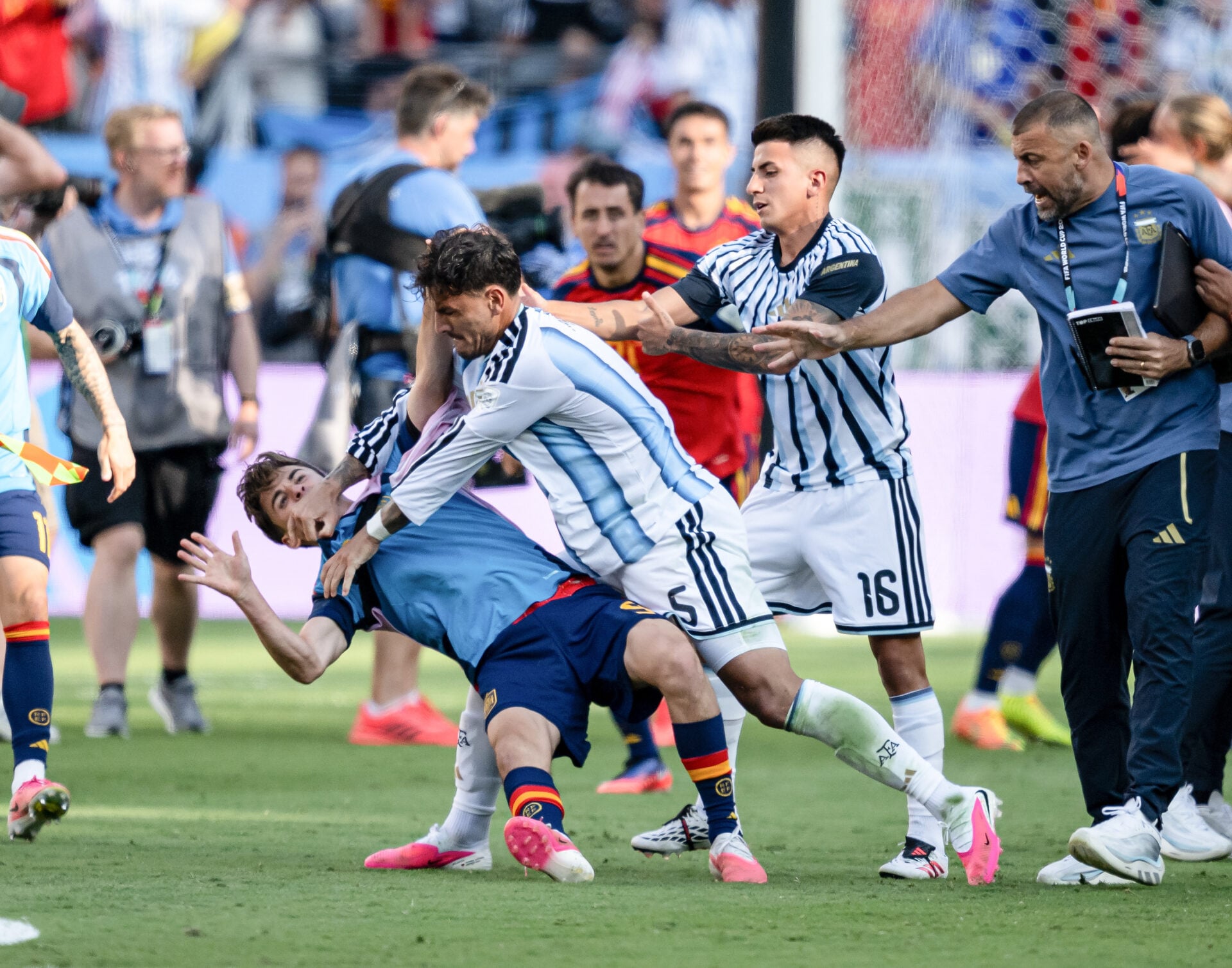
FIFA's sanctions against the Argentine Football Association (AFA) have come under scrutiny after individual players faced heavier penalties. Henry Winter, a journalist, expressed concerns over the "relative leniency" shown to the AFA while questioning the fairness of the punishments. The AFA was fined $321,000 for several disciplinary breaches, including the use of a Falkland Islands banner, team misconduct, and discriminatory chants and gestures from supporters.
They are also required to play their next two home matches at 50% capacity, with one of those restrictions temporarily lifted. Additionally, $100,000 of the fine is suspended and will only be paid after a probationary period. In contrast, players such as Leandro Paredes faced harsher punishments. Paredes received a 10-match international ban and a $90,000 fine for defending himself against an alleged provocation.
Nahuel Molina was suspended for seven games with the same fine. Winter argued that the financial burden on the AFA barely scratched the surface of their $33 million earnings from the World Cup campaign. He noted that Thiago Almada was banned for one match, Roberto Ayala for three, and Spain's Gavi also received a one-match ban. Paredes has criticized FIFA's decision, claiming it is favoring Spain and not considering the context of his actions.
The AFA plans to appeal the decision to FIFA's Appeals Committee and possibly take the case to the Court of Arbitration for Sport. FIFA's verdict remains in place, but the real debate lies in whether the $321,000 fine is a sufficient punishment for a federation that earned approximately $33 million.
Written by urgent.news from Yahoo Sports's reporting — not their text. Machine-written — may contain errors; check the original before relying on it.