PIAC marks 15 years of oil revenue accountability and transparency
The Public Interest and Accountability Committee (PIAC) has marked 15 years of promoting transparency and accountability in Ghana’s management and use of petroleum revenues.
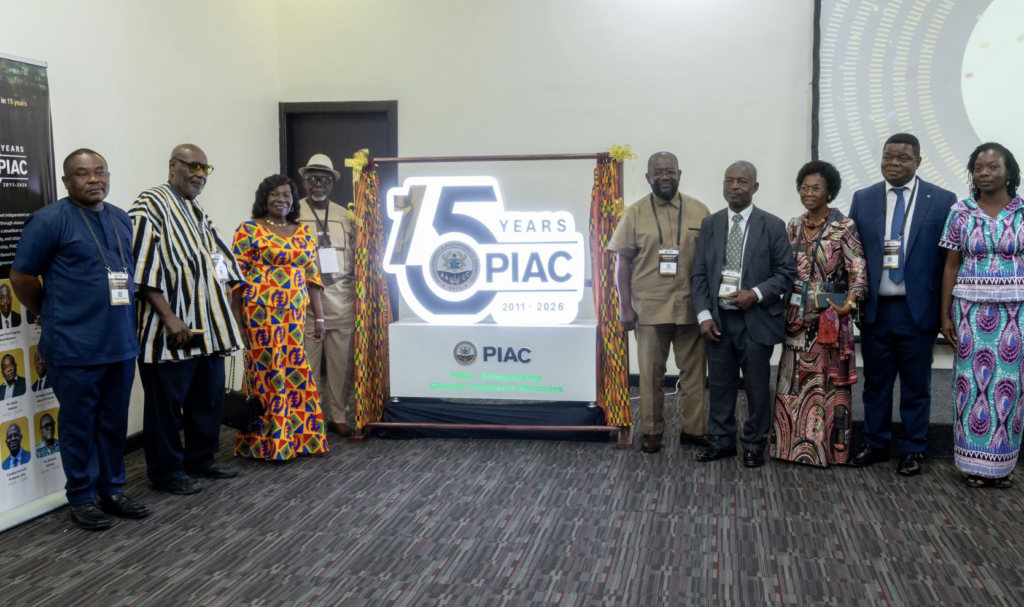
The Public Interest and Accountability Committee (PIAC) celebrated its 15th anniversary in Ghana, marking its ongoing efforts to promote transparency and accountability in the management of petroleum revenues. Established under the Petroleum Revenue Management Act, 2011 (Act 815), PIAC's role is to monitor government compliance with laws, promote public participation in revenue management, and provide independent assessments for Parliament and the Executive to use in their oversight duties.
During the anniversary celebrations in Accra, PIAC Chairman Richard Ellimah highlighted the Committee's work through reports, inspections, public engagement, and policy discussions. He emphasized that resource management is a collective responsibility involving government, Parliament, oversight institutions, civil society, the media, academia, traditional authorities, development partners, and citizens.
Ellimah urged the public and media to continue demanding information and participating meaningfully in discussions about petroleum revenue use.
Professor Akosua Darkwah, the Chairperson of the anniversary event, noted that Ghana recognized natural resources alone do not guarantee development. She cited Norway's success in investing oil and gas surplus revenues as an example of using resource wealth for long-term national development. PIAC's 15-year journey, according to Prof. Darkwah, showed that deliberate choices in resource management and investment are crucial for sustainable development.
Mr Noble Wadzah, a former PIAC Chairman, stressed that while transparency alone is insufficient for accountability, implementing PIAC's recommendations is critical. He pointed out that PIAC has published 29 statutory reports and that these recommendations have influenced public policy and laws. Wadzah called for stronger financial and operational independence for PIAC and urged protecting intergenerational equity safeguards.
He cautioned against spreading petroleum revenues across numerous small projects, highlighting the need for strategic and sustainable utilization of the finite resource.
Parliament's Finance Committee Chairman Isaac Adongo called for a clear legislative framework to ensure PIAC's funding, emphasizing that the Committee's financial sustainability should not rely solely on government discretion. Adongo advocated for a broader discussion on managing petroleum revenues to build wealth for future generations rather than consuming them primarily in the present. He cautioned that without adequate safeguards, Ghana risks leaving future generations with an "empty bucket."
Written by urgent.news from MyJoyOnline Ghana's reporting — not their text. Machine-written — may contain errors; check the original before relying on it.