Oregon Is Spending More Than Ever on Low-Income Housing. A State Law Keeps the Details Secret.
The post Oregon Is Spending More Than Ever on Low-Income Housing. A State Law Keeps the Details Secret. appeared first on ProPublica .
Oregon is allocating more funds than ever before to develop affordable housing for low-income residents. In the past five years, the state has granted developers a total of $1.4 billion for these projects, with the cost of constructing each apartment rising to nearly $540,000. Dozens of new projects are set to receive an additional $850 million in future state funding.
Federal tax credits, which the state oversees, will further augment the funds available. Despite the significant state investment, the public remains denied access to the financial details of how these dollars are being spent. Oregon is one of only a handful of states with an exemption in its public records law that prevents the disclosure of the financial specifics of subsidized housing projects, which has hindered researchers and journalists attempting to scrutinize the costs.
This secrecy is particularly concerning in the Pacific Northwest, where widespread concerns over the housing crisis and homelessness have been linked to the lack of affordable housing. Margaret Van Vliet, a former director of Oregon's state housing agency, has called for a review of the exemption, arguing that lawmakers should reconsider it given the ongoing growth in Oregon's homeless population, despite the substantial state spending on housing.
In other states, researchers and reporters have leveraged developers' financial records to investigate the escalating costs of subsidized housing. For instance, a 2020 report by the Los Angeles Times exposed that the cost of some low-income housing units in California had skyrocketed to over $1 million each, largely due to government-imposed construction rules that drove up prices.
The study found that California could have built 12,000 additional low-income homes between 2011 and 2015 if construction costs had been closer to those in other states. Likewise, a 2021 study co-authored by Jason Ward, an economist at the nonpartisan Rand Corp., compared the costs of constructing subsidized housing across California, Texas, and Colorado, revealing that California's highest prices were driven by requirements to pay "substantially above-market wages" and unusually high architectural and engineering fees.
Without knowing the true costs, it would be impossible to replicate such analyses in Oregon. "For all the public money" spent on housing, "we seem to be digging a deeper hole," Van Vliet lamented. The issue of cost disclosure in Oregon's subsidized housing has its roots in a 1997 state law, when the state housing agency had a staff and budget that were a fraction of their current size.
State housing officials warned lawmakers about the potential risks of revealing the financial details of low-income apartments, suggesting that disclosure could expose developers to takeover or buyout attempts. Consequently, lawmakers overwhelmingly approved the exemption. While some details about subsidized housing in Oregon are publicly available, such as costs for projects funded by the Portland area's regional government, they only account for a small fraction of the units being developed.
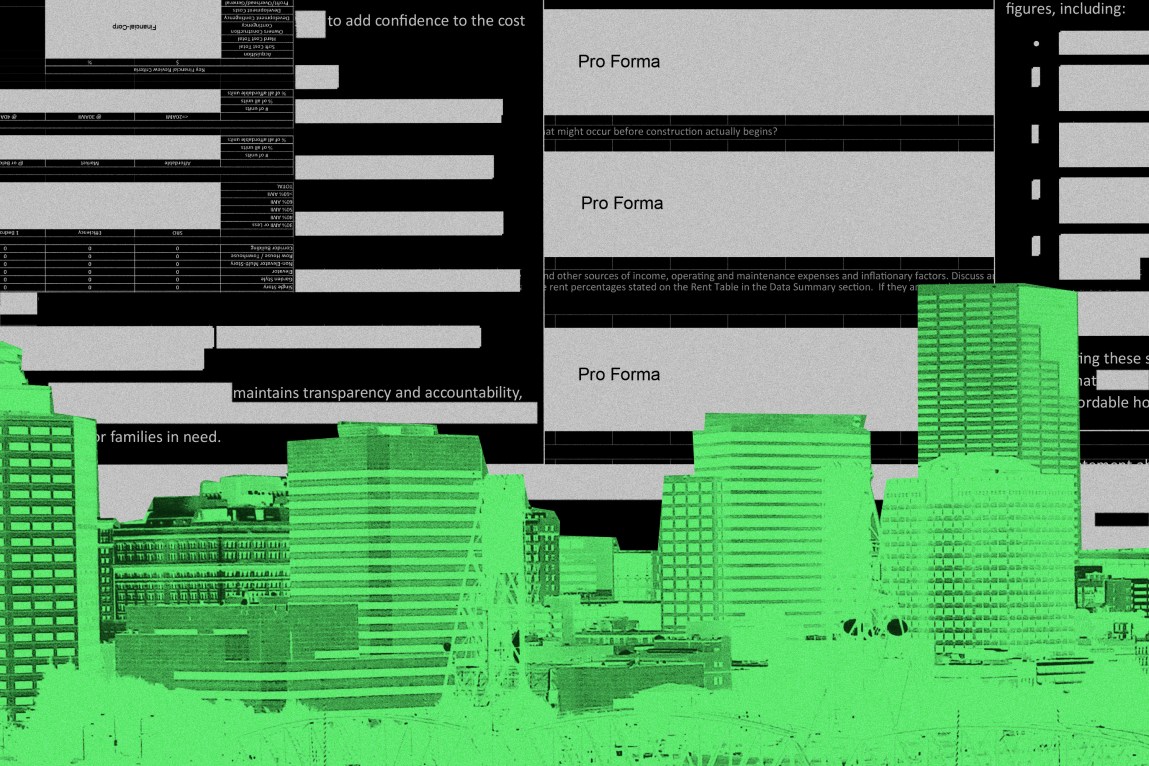
The majority of subsidized housing in Oregon is built by private developers, funded through Oregon Housing and Community Services. The state agency discloses how much a developer initially claimed a project would cost when applying for funding, but it redacts the detailed expenses, including construction materials, contractor profits, and fees paid to various intermediaries.
The agency claims it knows the per-unit, per-square-foot, and per-bedroom costs for each subsidized development but maintains that this information is not subject to disclosure. Oregon's sunshine committee, responsible for reviewing public records exemptions, should consider revisiting the low-income housing carve-out, according to its co-chair, Charlie Fisher.
Written by urgent.news from ProPublica's reporting — not their text. Machine-written — may contain errors; check the original before relying on it.