Urgent.News

What's breaking now, across thousands of outlets.

Editions

Business

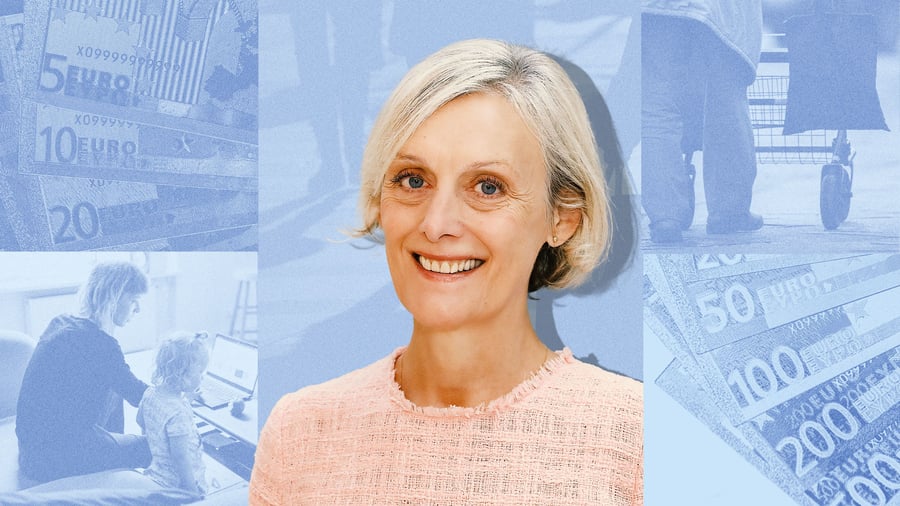
Monika Queisser: „Regierungen stürzen über Rentenreformen – nicht über Gesundheitsreformen“

Die OECD-Rentenexpertin erklärt, wie die deutsche Rente international dasteht, warum die Rente mit 63 wegmuss, und sagt, dass Leute mit der kleinsten Rente in den reichsten Haushalten leben.

Monika Queisser: „Regierungen stürzen über Rentenreformen – nicht über Gesundheitsreformen“

Monika Queisser praised the plan of the Rent Commission, with Chancellor and Social Minister promising to implement the "grand design". However, the plan now faces opposition from parts of the Union and SPD, who want to keep the pension at 63 years old. The reason for this is that the pension after 45 years of contributions was originally designed for heavy workers who couldn't work past 67, such as the famous plasterer.

Studies have shown, though, that this mainly benefits male skilled workers with relatively high pensions who have fewer health problems than expected. The two issues are confused: recognizing life achievement and cushioning the consequences of hard work. For those who truly can't work anymore, there's the disability pension, which could be increased.

But the pension at 63 is too expensive because it follows the "kettle principle". Now, one-third of all new pensioners get the pension at 63, while another third get deductions. This means that two-thirds of all new pensioners retire before the regular retirement age. This figure has astonished me. Many continue to work past 63, though.

Since 2023, in Germany, one can work without limit even with a pension. This sounds like a reasonable incentive for people to work longer. In practice, many already receive a pension and salary from age 63. This is a very expensive incentive, and the community of contributors must finance it. France has recently changed the rules so that the combination of pension and salary income is calculated by age.

They have the international overview: How do other countries regulate the pension for people who objectively can't work anymore? Austria has a heavy worker pension, France is debating how to measure "disability" in work, but no one has found the guiding stone. The problem is always the same: How do you define heavy work? Is it just physical or also psychological?

What about modern working forms, like working constantly online? There's no easy answer. The OECD therefore recommends making these early retirements dependent on individual medical examinations. They have the global overview. We seem particularly clumsy in securing the pension. No, with the gradual increase of the retirement age to 67, we are ahead of many countries.

And with the sustainability factor, we first made the pensions demographic-neutral. But with the 63-year pension and the cut-off points for the pension level, we have turned the tide again. And the 2025 pension package, of course, went in the wrong direction: Expanding the mother's pension costs five billion euros a year - and doesn't help the poorest mothers, as they are counted against the basic income.

Is our demographic problem really bigger than in other OECD countries? Partly - but not as brutally as in Japan or South Korea, where birth rates have plummeted. We have helped with the positive labor market development since 2000, thanks to immigrants who have increased the number of contributors. But this is not to be expected in the future.

If people work and pay contributions, the problem would be much smaller. Is our pension system particularly expensive? Neither particularly generous nor particularly expensive. We have around eleven percent of gross domestic product for all pension expenses, including civil servants. The OECD average is about nine percent. This is increased, but not an outlier.

With taxes and deductions, the pension in Germany comes to around 53 percent of the last net salary - where does it compare? Below the OECD average. Importantly, in most nations, people with low income get more because their systems integrate protection against old-age poverty. In Germany, they don't. There's the basic pension supplement and basic income, but even together they don't amount to much.

Poor pensioners are relatively poorly off in Germany. Why is this so? It's due to our almost sacrosanct equivalence principle, the fixed coupling of contributions and benefits: Those who earn little get little pension. This is combined with the fragmentation of the system: statutory pension, civil servant pension, professional association pension funds, etc. If not all citizens are in one system, you can't sensibly redistribute.

And because of the contribution ceiling, there's hardly any pension significantly above 2000 euros. This also limits redistribution. Experts like former SPD chief Sigmar Gabriel propose to only increase pensions with inflation, not with wages. A good idea? Internationally, many countries do this when they need to save: They suspend pension adjustments or only link them to inflation, not wage growth.

France does it relatively often - they freeze civil servant pensions for six months, which quickly saves a lot of money. Why is the Rent Commission still against it?

Written by urgent.news from Handelsblatt's reporting — not their text. Machine-written — may contain errors; check the original before relying on it.

Read the original at handelsblatt.com →

More in Business

More from Friday 21 August →