India, Gulf, Turkey Challenge China in Africa’s Infrastructure Market
Explore how India, Gulf nations, and Turkey are challenging China's dominance in Africa's infrastructure market, creating a new era of multipolar competition.
In a rapidly evolving infrastructure landscape across Africa, India, the Gulf nations, and Turkey are increasingly challenging China's long-standing dominance. While the Chinese continue to hold the upper hand in terms of sheer project volume and financial backing, other countries are making significant inroads. India, Turkey, and the Gulf states are steadily expanding their influence through strategic partnerships, access to finance, and specialized expertise in construction and logistics.
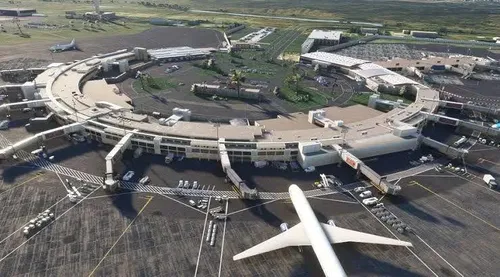
Notably, Kenya serves as a case study for this shifting power dynamic. After the failure of India's Adani Group's modernization project at Jomo Kenyatta International Airport, China stepped back in to secure a substantial contract. This pattern echoes across the country, with Chinese entities such as CRBC stepping into roles vacated by other international players like France's Vinci. CRBC's dominance in Kenya is evident, with the firm having secured contracts worth nearly $9.3 billion.
The Chinese model of integrating financing, engineering, and long-term operations into a single package is highly appealing to African governments, minimizing their financial risks and upfront costs. Western firms, burdened by higher labor costs, stringent financing standards, and elevated risk premiums, find it challenging to compete with this all-encompassing approach. Consequently, many Western companies have pivoted towards consultancy, design, and project management roles.
However, the tide is turning. Turkey's Yapi Merkezi has emerged as a key player in East Africa, recently constructing sections of Tanzania's railway and taking over as the lead contractor for Uganda's Standard Gauge Railway. The UAE, through DP World, has also made notable strides by leveraging its financial resources to establish one of Africa's largest port portfolios.
Similarly, India, while still selective in its African ventures, is steadily building its footprint. India's involvement, however, remains less integrated compared to China's, lacking a comprehensive ecosystem that spans the entire infrastructure lifecycle.
The contemporary infrastructure race in Africa is no longer a binary conflict between China and the West. Instead, it's a multifaceted competition involving Chinese corporations, Turkish contractors, Gulf investors, Indian conglomerates, African pension funds, and multilateral development institutions. Each entity brings unique strengths to the table—be it China's scale, Turkey's lower labor costs, the Gulf states' financial clout and logistics know-how, or India's strategic partnerships.
For African governments, this diversification of bidders enriches their bargaining power and diminishes reliance on a single external partner. Despite China's continued supremacy, Africa's infrastructure market is undeniably becoming a more multipolar arena, shaped by a complex interplay of financial models, geopolitical interests, and long-term strategic considerations.
Written by urgent.news from IOL's reporting — not their text. Machine-written — may contain errors; check the original before relying on it.