How much state intervention is too much for Indonesia?
Prabowo could hope to relive Soeharto’s era by recentralizing the government and strengthening the military, two pillars that had defined Soeharto’s New Order, while slowly erasing regional autonomy and freedom of speech, the two key achievements during the post-Soeharto democratization, also known as the Reform Era.
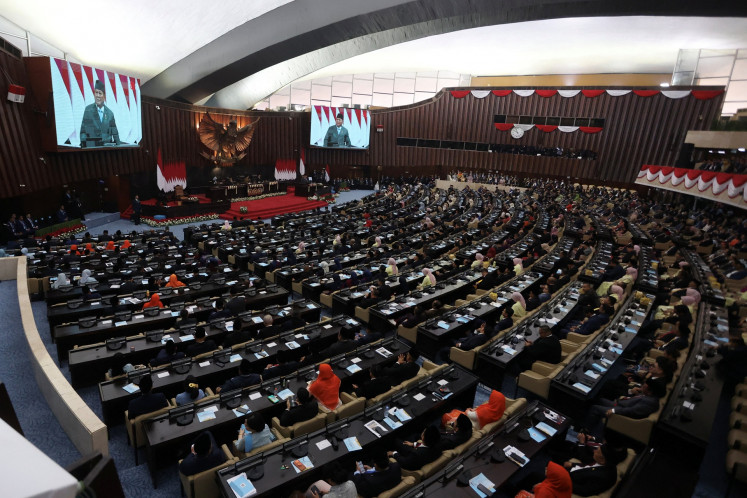
Indonesia is grappling with the question of how far state intervention should go, as President Prabowo Subianto's administration has rapidly rolled out 121 "transformative" policies in just 21 months. These initiatives, averaging one new policy every five days, aim to address longstanding issues that have gone unaddressed for decades.
Prabowo's ambition to centralize the government and strengthen the military echoes the New Order era under Soeharto, while simultaneously undermining the regional autonomy and freedom of speech that marked the post-Soeharto democratization, or Reform Era.
Critics argue that Prabowo's policies are disruptive, but his recent State of the Nation Address suggests that he is only accelerating the transformation agenda. Despite only being in office for 21 months, his administration has introduced a flurry of policies, all designed to rectify problems that had been neglected for years. From a macroeconomic perspective, state intervention has been crucial in driving development turnarounds since World War II, particularly in response to inequality, labor movements, and market failures associated with postwar capitalism.
Examples from Europe and East Asia demonstrate how state-led coordination can build productive capacity, mobilize capital, and enhance international competitiveness.
The real question remains: does Prabowo's approach to state intervention align with the democratic foundations that were established after the fall of Soeharto more than 25 years ago? If Indonesia follows Prabowo's lead, it risks replicating the shortcomings of Soeharto's New Order regime, rather than building upon the democratic gains of the Reform Era. With the depletion of oil and gas revenues and new global constraints, the path ahead for Indonesia's state intervention is complex and requires careful consideration.
Written by urgent.news from The Jakarta Post's reporting — not their text. Machine-written — may contain errors; check the original before relying on it.
Also reported by 1 other outlet
- How much state intervention is too much for Indonesia? thejakartapost.com