How Israel is expanding settlements in drive to reshape West Bank
There has been a significant expansion of building and road construction on Palestinian land occupied by Israel in recent years.
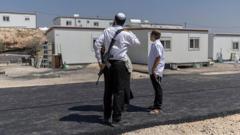
In a September ceremony, Israeli Prime Minister Benjamin Netanyahu announced his government's commitment to preventing the creation of a Palestinian state. This was announced during the signing of an agreement to expand a settlement in the strategically important area known as E1, located just east of Jerusalem. Recent days have seen the opening of tenders for the construction of approximately 1,200 settlement homes in the area, leading to widespread condemnation.
International law deems all settlements illegal, and global pressure has caused Israel to delay building in the region for decades. Following the recent announcement, the UN Secretary-General declared the plans an "existential threat" to a future Palestinian state, while a joint statement by the UK, France, Germany, Italy, and Canada deemed the plans "unacceptable" and warned they would "drive a wedge through the West Bank."
These sentiments were echoed by the European Union, which welcomed the call from Palestinian President Mahmoud Abbas for the signatories to take "concrete measures to halt the implementation of the E1 plan." The West Bank, captured during the 1967 war, has been under Israeli control ever since. Israel has built around 160 settlements housing 700,000 Jews since then, with a notable increase in settlement construction since 2022, particularly under Prime Minister Netanyahu's leadership.
One example is Tzofim, a settlement in the northwest of the territory, where construction of around 185 new buildings has been documented since 2022. Similarly, Kochav Hashahar has seen the expansion of an existing settlement with the construction of roads, houses, and a new settler outpost on surrounding land. Hundreds of outposts, illegal under Israeli and international law, have been established since the 1990s, with the E1 settlement being the most contentious.
The proposed location of the E1 settlement would divide the West Bank in two, isolating East Jerusalem from the rest of the territory and preventing the development of a contiguous Palestinian urban area connecting Ramallah, East Jerusalem, and Bethlehem. Peace Now, an Israeli anti-settlement watchdog, has challenged the plans in court, warning that the government is trying to sign contracts with contractors before the upcoming elections to make it harder for the next government to cancel the construction.
The Israeli government has also announced over a billion shekels ($360m; £246m) for new road construction in the West Bank, aiming to "strengthen their grip on the territory." Additionally, settler violence against Palestinians has escalated, with recent incidents of besieging Palestinian homes and cutting off their water and power.
These developments have led Palestinians and supporters of Palestinian statehood to fear that the "facts on the ground" will make it unviable to establish a Palestinian state. Some senior Israeli ministers express the strategy of establishing sovereignty in Judea and Samaria, first on the ground and then through legislation, with Prime Minister Smotrich stating that the construction of E1 will help achieve this goal.
Written by urgent.news from BBC World's reporting — not their text. Machine-written — may contain errors; check the original before relying on it.
This story
This is one outlet's version. Read the fullest account.