Hichilema's Second Term: A Pivotal Moment for Economic Development
Hakainde Hichilema begins his second term as President of Zambia amid economic challenges and political scrutiny. As he aims to shift from stabilisation to development, can he meet the expectations of Zambians for a more prosperous future?
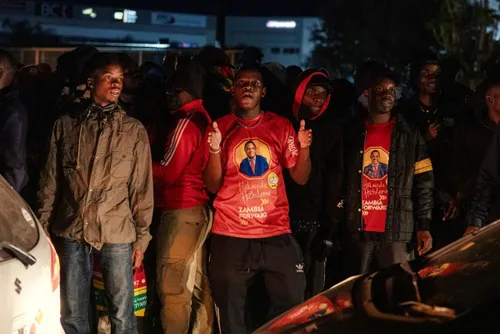
Hakainde Hichilema has been re-elected for a second term in Zambia's recent elections. On August 18, 2026, the Electoral Commission of Zambia officially declared him the winner of the presidential race. Hichilema secured 60.5% of the votes, while his main rival, Brian Mundubile, obtained 38%. This victory presents an opportunity for Hichilema's United Party for National Development to solidify the political project initiated in 2021.
In his first term, Hichilema focused on stabilising the economy, which had been heavily burdened by unsustainable foreign debt, widespread poverty, and electricity shortages. He managed to reduce the debt burden, restore investor confidence, increase mining investment, and boost copper production. However, despite these macroeconomic stabilisation efforts, deep-rooted structural poverty and the lack of significant improvements in living standards remained unaddressed.
In this second term, Hichilema's administration will need to shift its focus from stabilisation to development. As Africa's second-largest copper producer, Zambia has a chance to increase copper production to three million tonnes annually by 2031. This would make the country a significant exporter of copper. Nonetheless, merely increasing copper production without deeper economic transformation could strengthen the existing extractive model on a larger scale.
Zambian political economist Grieve Chelwa has argued that copper should be viewed not merely as an export commodity but as a foundation for industrialisation. Hichilema has the chance to break the long-standing pattern of mineral extraction and structural dependence. The timing is opportune, as world powers like China and the United States are competing for critical minerals.
Economic forecasts for Zambia are promising. According to the World Bank, Zambia's GDP is expected to grow by an average of 4.7% between 2026 and 2028, heavily relying on investments in electricity, sustained performance in services, agriculture, and mining, as well as progress toward the ambitious goal of tripling copper production to 3 million metric tonnes per year by 2031. However, merely increasing copper production does not guarantee improved living conditions or national sovereignty for the Zambian people.
Hichilema faces additional challenges in his second term, including the need for democratic revitalisation. During his first term, there were concerns about restrictions on opposition activity, arrests of political rivals, and the narrowing of political space. In the 2026 election, there were also allegations of vote rigging, violence against electoral staff, and ballot theft.
The government arrested eleven people, including senior opposition figures, citing a suspected insurrection plot. While Hichilema was re-elected, citizens are now expecting tangible improvements in jobs, energy costs, living standards, public services, and a government that can tolerate criticism.
Written by urgent.news from IOL's reporting — not their text. Machine-written — may contain errors; check the original before relying on it.