Handel: Chinesische Waren umetikettiert? US-Vorwürfe alarmieren Südostasien
Die USA werfen den Staaten Südostasiens vor, China beim Handelsbetrug zu helfen. Die Region versucht nun, Trump zu besänftigen – trotz Zweifeln an der Stichhaltigkeit der Anschuldigungen.
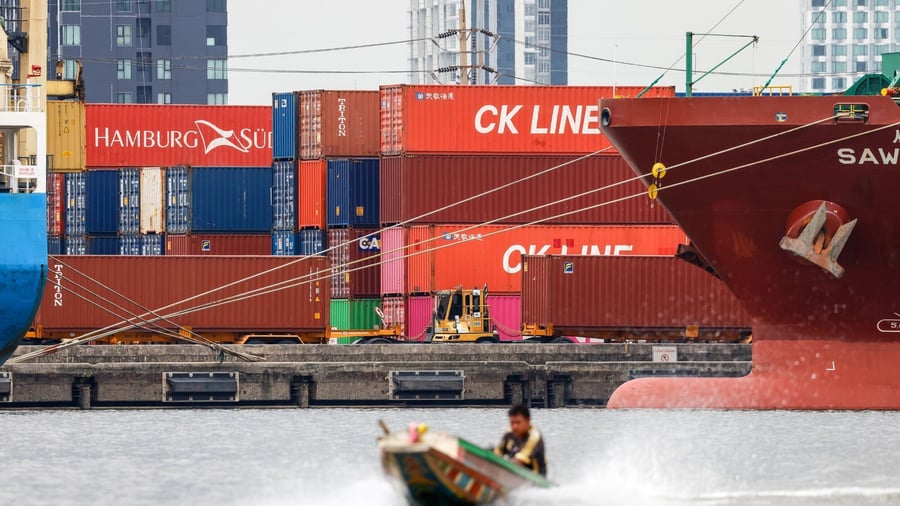
A report titled "The Great Transshipment Scam" presented by US Trade Advisor Peter Navarro last week has alarmed Southeast Asian countries regarding claims that Chinese goods are being falsely labeled as originating from other countries to avoid US tariffs. The allegations are causing concerns about potential new tariffs and prompting promises from affected nations to appease the US.
The credibility of the US accusations remains disputed. The report, which cites various estimates, states that goods worth between $34 billion and $303 billion have their Chinese origin concealed through intermediaries in third countries, resulting in annual lost US customs revenue of $19 to $26 billion. A significant number of these countries are Southeast Asian nations, including Indonesia, Malaysia, Thailand, Vietnam, and Singapore.
Southeast Asian countries like Indonesia, Malaysia, Thailand, and Vietnam are described as "deeply entrenched in China-linked production networks" and responsible for "significant amounts of illegal transshipment". Singapore is listed as a "logistics platform" for the US-criticized re-labeling of Chinese goods. The US threatens tariffs of up to 40 percent in the region, reflecting the increasing US pressure.
The US has threatened a 40 percent tariff for "transshipment" if a country only performs minimal processing steps but still lists itself as the origin point. Indonesian Economy Minister Airlangga Hartarto denied that his country has ever engaged in transshipment. Thailand's Ministry of Commerce stated that they take the issue very seriously and threatened legal action for falsified origin declarations.
The Thai government pledged to strengthen controls and cooperation with US authorities. Singapore stated that there is no tolerance for fraud and that they take trade compliance seriously. Vietnam, the largest US trading partner in the region, indicated a willingness to cooperate and continue dialogue with the US over its concerns.
Vietnam has previously made concessions to the US, including new tariffs for exporters mislabeling Chinese goods as "made in Vietnam". Vietnamese authorities allowed US customs inspectors into factories with connections to China in July to investigate fraudulent practices, although inspectors apparently found no evidence. China's exports to the US have fallen by 20 percent, while exports to Vietnam have risen by a similar percentage.
The Navarro report attributes these trade shifts to China's products being diverted through countries like Vietnam to bypass US-China tariffs. However, it acknowledges that "some of this shift may reflect legitimate changes in production, investment, and sourcing". Chinese and non-Chinese companies have been relocating parts of their production to countries like Vietnam to reduce tariff risks for years, often using Chinese precursors in the process, which does not fit the traditional definition of illegal transshipment.
The US government, however, defines the alleged "transshipment scam" much more strictly. In a New York Times guest column, trade advisor Navarro gives the example of a motorized TV stand delivered from Vietnam to the US. The furniture piece is indeed produced in Vietnam, but it uses a motor from China, which the US claims is a violation of the US-China tariff.
Trade expert Deborah Elms of the Hinrich Foundation in Singapore notes in an analysis of the Navarro report that the addition of substantial value creation does not matter; even the mere presence of Chinese precursors is enough for the US government to accuse of origin mislabeling. This goes beyond the common definition, which only requires a significant change in the name, character, or intended use of a product to establish a legitimate new origin point.
The Navarro report concludes that effectively, every trade could be labeled as transshipment, Elms comments. "It would be funny if it weren't so serious."
Written by urgent.news from Handelsblatt's reporting — not their text. Machine-written — may contain errors; check the original before relying on it.