From Models to Agents: The Next Phase of AI Adoption in Molecular Discovery
Despite advances, AI applications in scientific research have not experienced their “Claude Code” moment. The compute power exists. The models exist. What’s missing is a system that coordinates them. The post From Models to Agents: The Next Phase of AI Adoption in Molecular Discovery appeared first on GEN - Genetic Engineering and Biotechnology News .
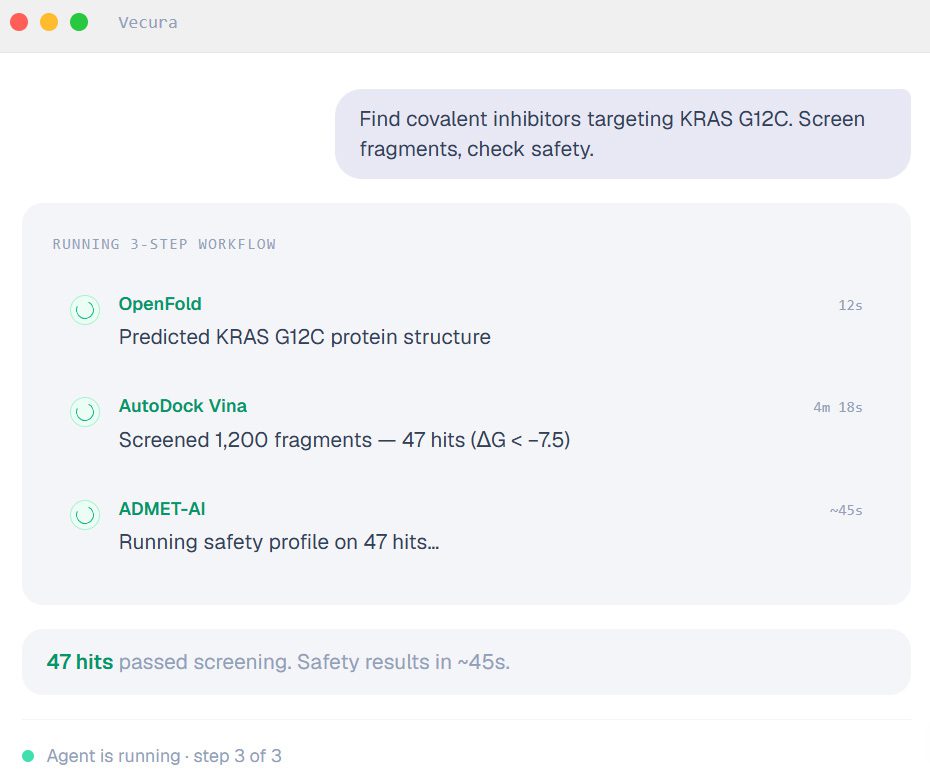
The artificial intelligence (AI) landscape has seen significant advancements in recent years, with large language models becoming increasingly capable. However, the impact of AI on the biotech and pharmaceutical industry has been slower to materialize. Researchers are still grappling with the process of identifying drug targets, predicting protein structures, analyzing scientific literature, and generating molecular insights.
While AI models like AlphaFold, RoseTTAFold, and others have made remarkable progress, they often need to be used in isolation, requiring scientists to manually navigate between different platforms and tools. This creates a gap between generating insights and taking action, limiting the potential of AI in scientific research. Enter agentic AI, a paradigm designed to function like a coordinated research team.
Unlike traditional AI systems that generate outputs in response to prompts, agentic AI systems understand objectives, plan tasks, retrieve context, coordinate tools, evaluate results, and recommend next actions. This approach aims to democratize drug discovery by bridging the gap between generating insights and acting on them. Agentic AI systems can automate iterative workflows, allowing researchers to focus on creative and intuitive aspects of drug discovery.
To illustrate the practical benefits of agentic AI, the article discusses the complex process of drug discovery and how agentic systems can streamline it. The preclinical drug discovery process involves several phases, from target identification and hit screening to lead optimization and preclinical validation. Throughout these phases, a common challenge is determining which model to use and when.
Vecura, a platform developed by NYB.AI, tackles this challenge by integrating a wide range of specialized tools, including AlphaFold for structure prediction, DiffDock for docking, and others. By adding an agentic AI layer, Vecura aims to reduce manual hand-offs and accelerate the transition from hypothesis to candidate prioritization.
A recent peer-reviewed paper from the same team delves deeper into the challenge of selecting the right AI model for drug-target interaction modeling. The paper proposes a practical framework that helps researchers clarify their objectives before selecting a model. By breaking down the decision-making process into clear steps, an agentic layer can guide researchers to choose the most appropriate model for their specific task, whether it's association discovery, interaction classification, affinity estimation, candidate ranking, pocket identification, pose assessment, or mechanistic hypothesis generation.
This approach ensures that the right AI models are engaged at the right moments, optimizing the efficiency and effectiveness of the drug discovery process.
Written by urgent.news from GEN Biotechnology's reporting — not their text. Machine-written — may contain errors; check the original before relying on it.