From heritage to high-rises, how Chennai grew taller
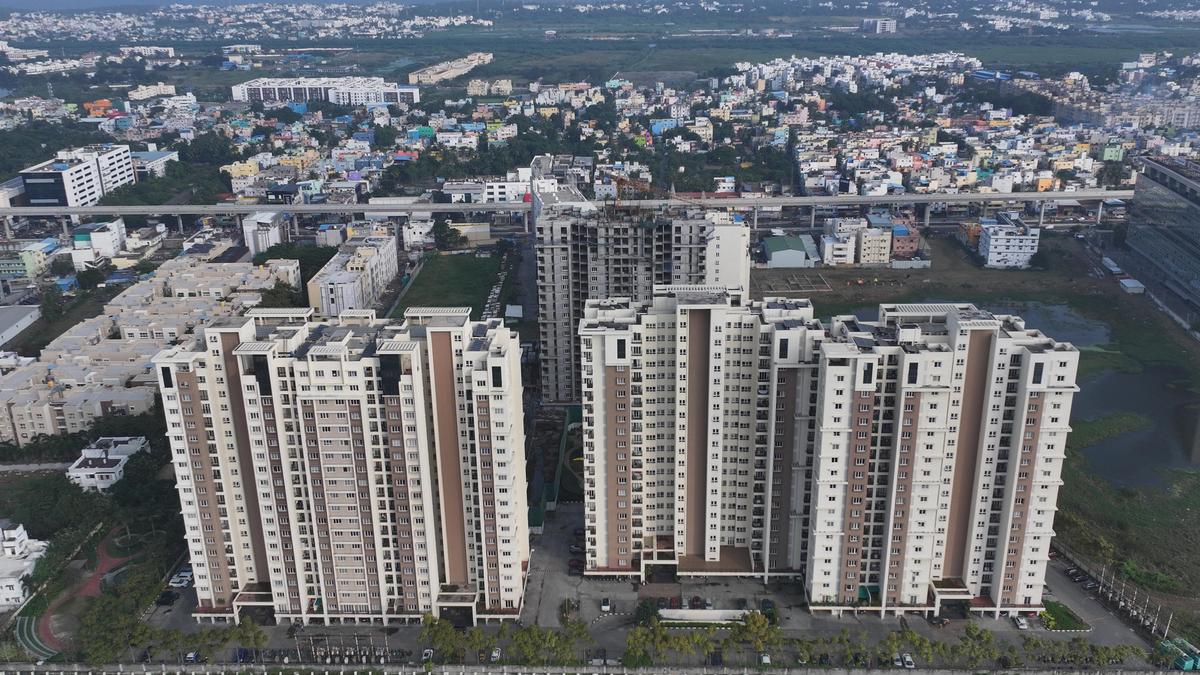
Chennai, once a modest settlement of simple fishing huts, has evolved dramatically over the centuries. In 1639, Francis Day, an administrator for the British East India Company, arrived in Madraspatam, which consisted of around fifteen to twenty fishermen's huts. By 1645, the British had transformed the settlement by constructing Fort St. George, marking the city's center. Today, Chennai boasts tall buildings and modern skyscrapers, a far cry from its colonial past.
The city's transformation is evident in the memories of older generations. M.L.N. Bharathi, an 88-year-old resident, recalls cycling through colorful residential areas in Teynampet to reach Mambalam station, gazing at the unique colored homes with political signs. He vividly remembers the sprawling complexes of T.I. Cycles, T.I.
Diamond Chain, Dunlop, and TVS, which dominated the landscape. However, the commute to Semmenchery now entails passing through glass towers, high gated communities, and malls, evoking a sense of nostalgia for the old Madras.
The city's evolution is also reflected in its architectural landmarks. The LIC building, the first multi-storey structure in Chennai, stands as a testament to the city's growth. The Ripon Buildings, Victoria Public Hall, and Madras High Court complex represent the colonial era, while the San Thome Church and St. Lazarus Church offer glimpses of Portuguese architecture.
The Parthasarathy and Kapaleeswarar temples showcase Pallava architectural styles, and the Palaeolithic site at Pallavaram marks the early days of human settlement in the region.
Architect Nischal Buddhavarapu reflects on the changes in the city's landscape. His father, B.S. Murthy, founded PADGRO Consultants Pvt. Ltd., which designed the Panagal Building near Marmalong Bridge. The architect notes that the earlier colonial Panagal building, a marvel of teakwood frames, stained glass windows, and marble flooring, has now become uneven and lackluster.
The growing demand for modern amenities and aesthetics among software technology workers has influenced the city's development, with a shift towards glass facades and contemporary designs in new constructions.
Written by urgent.news from The Hindu's reporting — not their text. Machine-written — may contain errors; check the original before relying on it.