From failures to flirtations, Miles Franklin's not-so-brilliant career
In the wake of Netflix's shiny new My Brilliant Career adaptation, we look at the woman behind one of Australia's most influential books.
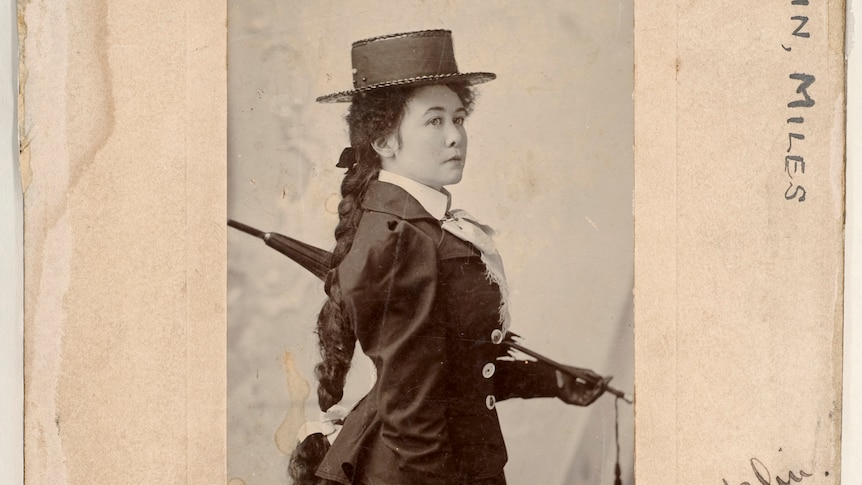
From the release of Netflix's TV adaptation of My Brilliant Career to the announcement of the Miles Franklin Literary Award winner, August seems to be the month of Miles Franklin. This year, a musical and novel about the renowned Australian writer have joined the growing canon of works inspired by her. Miles Franklin, the author of two prestigious literary awards in Australia, is known primarily for her debut novel, My Brilliant Career.
However, her life was filled with notable failures, flirtations, and even a time spent undercover. Born in Talbingo, NSW, in 1879, Franklin grew up on her family's farm, Brindabella Station, during a period of drought and depression. Despite the family's hardships, she found solace in books and writing. By 16, she was contributing articles to the local newspaper and working on her first novel, a London-set drama featuring lords and ladies.
Historian Alecia Simmonds notes that literature and writing were the only forms of artistic, intellectual, and creative expression available to women during that time, and Miles Franklin used this medium to understand, imagine, and influence the world around her. Despite being expected to marry and fulfill traditional roles, Franklin chose to write her way out of that destiny.
Encouraged by the local newspaper editor, she began working on My Brilliant Career, completing it in six months while tending to her farm responsibilities and caring for her siblings. The novel was initially rejected by publishers but was eventually published by British publishers in 1901. This success marked the beginning of Australia's national literary culture.
Franklin's friendships with influential figures like Rose Scott and Banjo Paterson helped her gain recognition, but her next few books were rejected, leaving her with little time to improve her craft. In her efforts to explore the conditions faced by servant class women, she decided to go undercover as a maid and servant, using the pseudonym Sarah Frankling.
While her manuscript about this experience was not published due to concerns over defamation, she continued writing for The Sydney Morning Herald. In 1906, Franklin moved to the United States at the age of 26, seeking to publish one of her manuscripts. Her time in the US allowed her to work with American feminists and immerse herself in the struggles of the working class.
However, her time in Chicago also saw her experiencing anxiety and insomnia, leading to a nervous breakdown. Despite this setback, Franklin continued writing and flirting, engaging with two millionaire brothers, one of whom was already married. Her relationship with the unmarried brother was politically opposed to traditional marriage but hinted at a possibility.
Franklin's biographer, Jill Roe, suggests that the affair ended in 1914 due to an attempt at abduction and rape. After World War I, Franklin moved to England to help on the home front and write about the war effort, working as a cook and orderly at the Scottish Women's Hospital for Serbian soldiers in Macedonia.
Written by urgent.news from ABC News AU's reporting — not their text. Machine-written — may contain errors; check the original before relying on it.