Eighty fighting years - the stand that laid the groundwork for ongoing struggle
The 1946 Passive Resistance Campaign marked a significant turning point in the struggle against apartheid. On the 80th anniversary, Selvan Naidoo and Kiru Naidoo revisit the courageous stand taken by ordinary South Africans against injustice. These brave individuals not only altered the course of history but also laid the groundwork for ongoing struggle and resilience in the face of adversity.
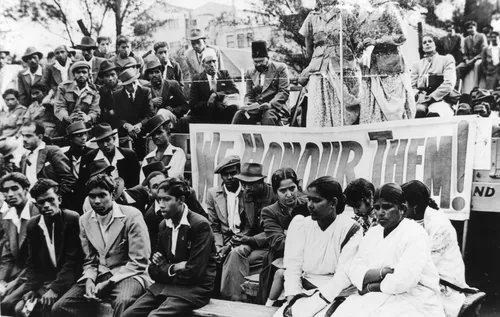
The 1946 Passive Resistance Campaign stands as a pivotal moment in the fight against apartheid, marking a significant shift in the struggle for South African freedom. Led by the Natal and Transvaal Indian Congresses, this non-racial movement aimed to challenge the racist laws that segregated residential areas. The battle cry "We Shall Resist!" echoed throughout Durban, as these ordinary South Africans defied the unjust laws and demanded dignity for all.
The campaign's timing was crucial, as the Indian community was expanding its presence in historically European neighborhoods, leading to calls for segregatory legislation. The Pegging Act of 1943 and the subsequent Asiatic Land Tenure and Indian Representation Act of 1946 were designed to control and limit Indian property ownership. These laws, paving the way for the Group Areas Act of 1950, became a cornerstone of apartheid policy.
Despite the harsh penalties, 10,267 individuals resisted the law between 1946 and 1948, choosing imprisonment over fines. Dr Jairam Reddy, chairperson of the Sastri College Alumni Society, remembered their sacrifice: "They gave up their freedom so that we could be free." Their actions were revolutionary, as they remained disciplined and steadfast even in the face of arrest, ensuring that others could take their place.
The campaign's strategic impact was two-fold. Firstly, it introduced the concept of non-racialism in collective action, breaking down barriers between different races in the struggle for freedom. Secondly, it brought the issue of racism to the forefront of the newly-formed United Nations Organisation, with the African National Congress and the South African Indian Congress uniting to lobby for change.
The dignity of housing became the spark that ignited this movement. As populations grew, the city council failed to address the housing and developmental needs of its black communities. The 1946 campaign not only altered the course of history but also laid the groundwork for ongoing struggle and resilience in the face of apartheid's adversity.
Written by urgent.news from IOL's reporting — not their text. Machine-written — may contain errors; check the original before relying on it.