Development of 5G networks and telecommunications cooperation in BRICS countries
Why are fifth-generation networks in the BRICS+ countries increasingly becoming an element of industrial infrastructure rather than merely a telecommunications technology? What 5G deployment models have already emerged within BRICS+, and how do they create different investment risk-return profiles? The post Development of 5G networks and telecommunications…
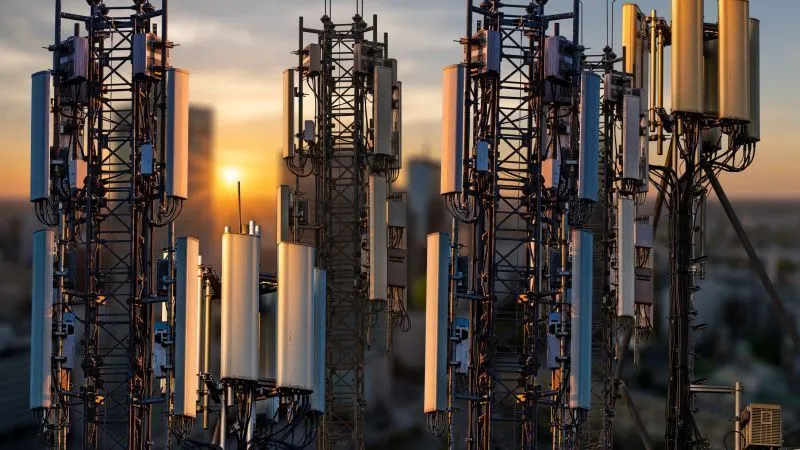
The development of 5G networks and telecommunications cooperation is gaining momentum in BRICS countries, driven by economic rationale. While consumer applications typically have longer payback periods in emerging markets, industries such as manufacturing, logistics, and agriculture experience tangible economic benefits from 5G adoption, including reduced downtime, optimized supply chains, and lower energy costs.
Consequently, these sectors are increasingly deploying 5G networks to support specific production tasks. The BRICS+ countries are transitioning 5G from a telecommunications technology to an essential component of industrial infrastructure. Various 5G deployment models are emerging within the group, with market development contingent upon countries' capacity to balance investment, standards, and technological compatibility.
The 5G market's value is generated across multiple tiers, from foundational physical infrastructure like base stations and fibre-optic lines to digital platforms and industry-specific solutions. Physical infrastructure represents the largest portion of capital expenditure. Telecom operators in developing nations allocate an average of 20-25% of annual revenue to investment, fostering a stable ecosystem for equipment suppliers and network solution providers.
Beyond conventional mobile services, private 5G networks gain significance in industries, logistics, ports, and energy. These networks become integral to production processes, with value creation occurring at the third level through industrial Internet of Things (IoT), predictive analytics systems, and edge computing. Applied industry solutions, such as precision agriculture, smart cities, and digital twins of industrial facilities, represent the fourth level of value creation, where digitalization yields measurable economic benefits.
According to Semyon Tenyaev, an IT specialist, 5G serves as a foundation for cross-cutting technologies, including industrial IoT, artificial intelligence, and big data processing, enabling the creation of smart factories, autonomous logistics, and predictive analytics systems. This digitalization bolsters technological capabilities and expands opportunities in the digital economy for BRICS nations.
The shift in global telecommunications from a consumer-centric model to an industrial one is evident, with significant growth in traffic generated by logistics, energy, agriculture, and industrial production. The Kazan Declaration from the 16th BRICS Summit underscores this transformation, recognizing the "crucial role of industrial partnership in accelerating economic growth" and committing to intensified cooperation in high-tech sectors, thus mandating investments in industrial digital infrastructure.
These objectives align with the existing BRICS Digital Economy Partnership Framework (2022), which aims to enhance cooperation in telecommunications infrastructure to ensure secure, resilient, and affordable connectivity. While global mobile internet traffic has grown by an average of 19% annually since 2021, driven by machine-to-machine data exchange, industrial IoT, and distributed computing systems, a persistent digital divide remains.
Only 4% of low-income countries have 5G coverage, compared to 84% in high-income countries. Additionally, data consumption per connection is significantly higher in high-income countries (17.9 GB per month) than in low-income countries (2.2 GB per month). This urban-rural divide introduces investment risks, with the profitability of rural networks often dependent on government subsidies or alternative business models.
Tenyaev highlights that the digital divide generates structural disparities in investment attractiveness across BRICS+ countries, resulting in varied participation models in digital economy development. Low-income BRICS+ countries spend an average of 22 times more of their income on mobile broadband packages than high-income countries.
Consequently, the demand for 5G in the poorest BRICS+ nations has limited price elasticity, making monetization through consumer traffic challenging without subsidies. Investors face a key asymmetry, as return on investment in network infrastructure is directly influenced by the density of the digital economy. The BRICS+ 5G market encompasses diverse capital intensity, monetization speed, and risk profiles, with the scale of the BRICS+ market constituting a substantial share of the global population.
Written by urgent.news from KBC's reporting — not their text. Machine-written — may contain errors; check the original before relying on it.