CUHK researchers perform Hong Kong’s first robot-assisted pelvic fracture surgery
A team of researchers from the Chinese University of Hong Kong (CUHK) has conducted the city’s first robot-assisted pelvic fracture surgery in what promises to be a safer, less intrusive alternative to a procedure typically considered among the most challenging. CUHK’s faculty of medicine on Friday said the novel orthopaedic robotic surgical system could turn a “new page” in trauma care amid a…
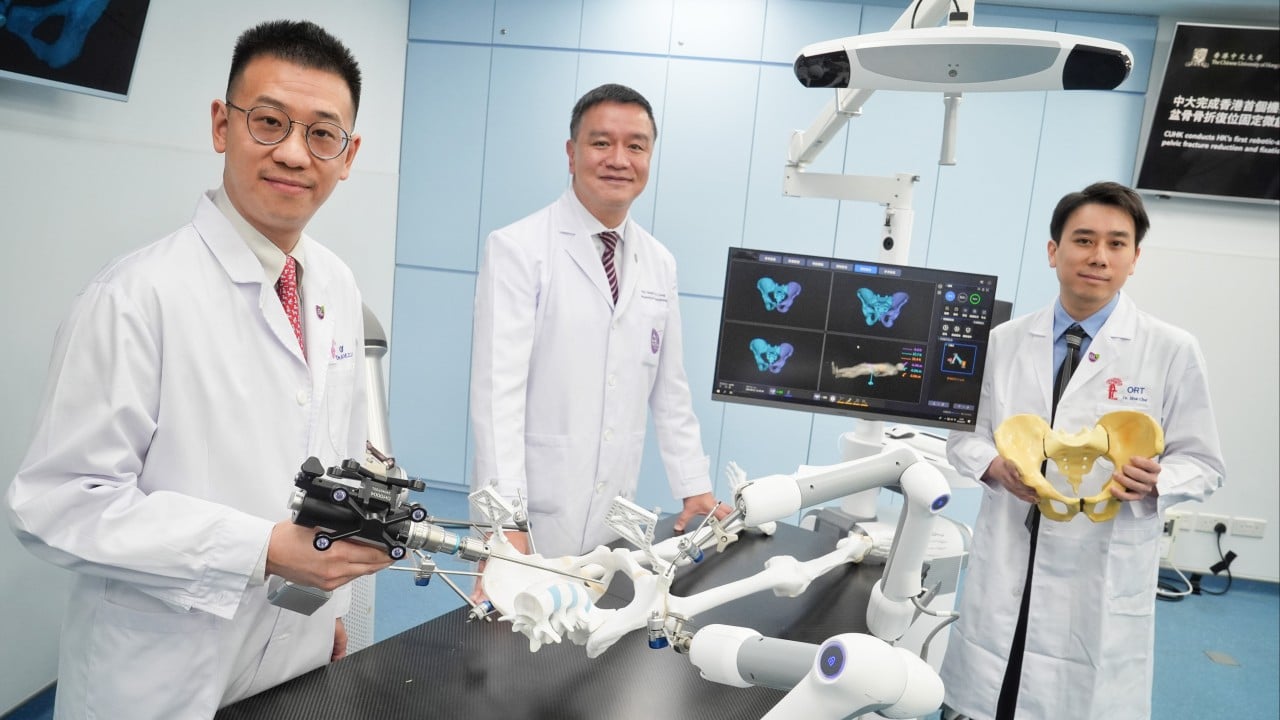
A team of researchers from the Chinese University of Hong Kong (CUHK) has successfully performed the city's first robot-assisted pelvic fracture surgery, offering a safer and less invasive alternative to traditional procedures, according to a statement released on Friday. The innovative orthopaedic robotic surgical system, developed with collaboration from Beijing Jishuitan Hospital's National Orthopaedic Medical Centre, has been put to use in three procedures at Prince of Wales Hospital in Sha Tin since June.
Dr Ronald Wong Man-yeung, clinical associate professor at CUHK's department of orthopaedics and traumatology, highlighted that the robotic system provides a "safe, precise, and minimally invasive" approach to pelvic fracture reduction, especially beneficial for geriatric patients who often have multiple medical conditions that increase the risk associated with traditional surgery.
This minimally invasive technique could significantly reduce complications, owing to the high concentration of blood vessels and vital organs in the pelvic area. Pelvic fractures, which are life-threatening and increasingly common due to Hong Kong's ageing population, have a one-year mortality rate potentially reaching 15 per cent.
The new system leverages real-time 3D imaging and robotic arms to realign fractures before securing them in place. Compared to traditional open surgery, which can result in patients losing up to one litre of blood, the robotic system has managed to reduce blood loss to as little as 10 to 20 millilitres. This reduction in surgical trauma not only improves post-operative recovery and pain relief but also enhances patients' mobility.
However, Wong pointed out certain limitations of the robotic system, such as its inefficacy in handling fractures more than two weeks old or severe fractures affecting both sides of the pelvis. To advance their research, the team is focusing on developing next-generation surgical technologies integrated with artificial intelligence and has filed two provisional patents in the United States.
Furthermore, CUHK is organizing workshops to introduce the robotic system to healthcare professionals for broader deployment.
Written by urgent.news from South China Morning Post - Hong Kong's reporting — not their text. Machine-written — may contain errors; check the original before relying on it.
This story
This is one outlet's version. Read the fullest account.