CPU-Z gets biggest update since 2001 with V3 — 100+ health checks, built-in stress testing, and XOC effective clock tracking
CPU-Z V3 introduces an overhauled validation system with over 100 detection points, and a new advanced validation feature that will check PC health with a stress test.
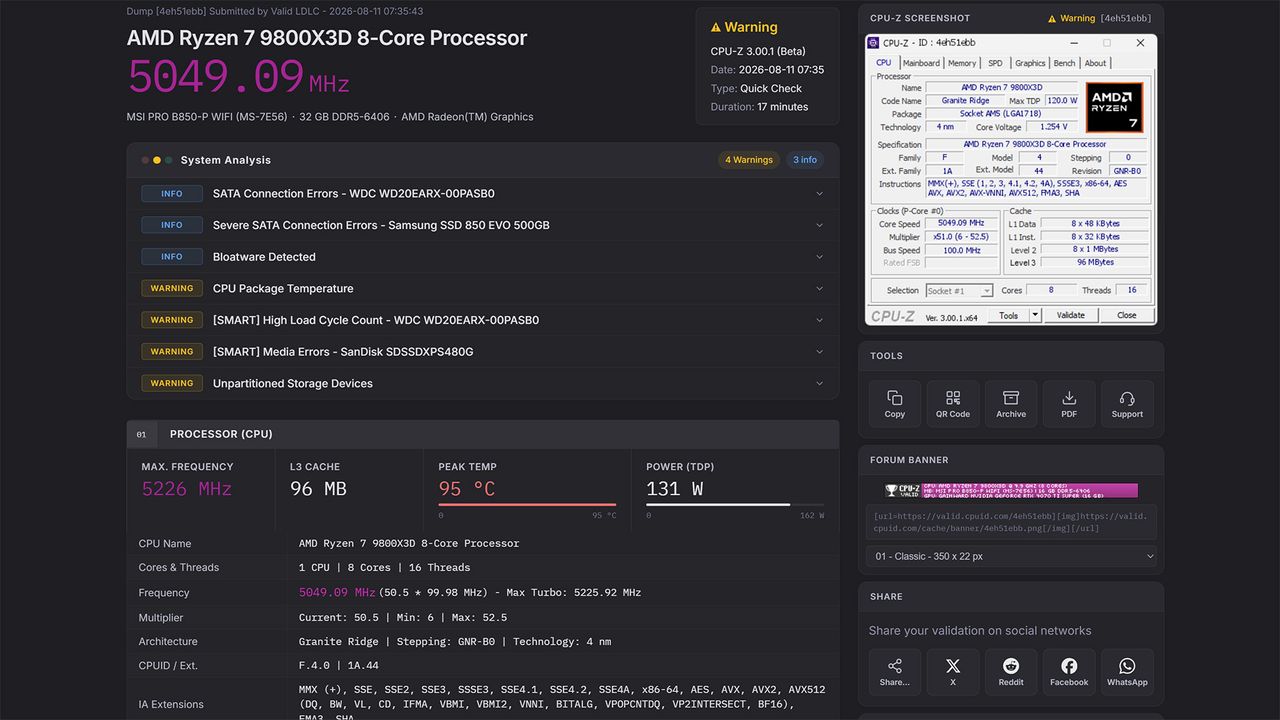
CPU-Z has released version 3, marking the most significant update since its debut in 2001. Among the many enhancements, the new validation system is the most prominent addition. This system now encompasses three modes: standard, advanced, and XOC. The standard mode swiftly assesses a PC's overall health, scanning over 100 detection points, including drivers, CPU temperature, bloatware, and more, within under ten seconds.
The validation results are categorized into three color-coded messages: ❌Critical, ⚠️Warning, and ℹ️Info.
The advanced validation mode introduces a comprehensive evaluation of the system's components, particularly under high load. This process can span several minutes to several hours due to stress testing and error detection for the CPU, RAM, and GPU. It also boasts an extensive benchmarking tool that measures CPU, GPU, RAM, and storage performance.
To cater to enthusiasts who push their systems to their limits, the XOC validator has been refined to accurately measure modern processors' clock speeds and handle memory overclocking, thereby preventing false validation rejections. It computes the effective CPU clock and input frequency, ensuring a correct final validated frequency even when the effective frequency is lower than the input frequency.
In comparison to the previous version, CPU-Z V3's XOC validator is more adept at handling the intricate, frequently changing clock speeds of contemporary CPUs. V2 had a five-second load time for XOC validation with a single measurement, whereas V3 provides a more accurate and thorough analysis. The new update aims to bolster CPU-Z's appeal to mainstream users, enthusiasts, and overclockers by offering improved health checks and diagnostics.
Written by urgent.news from Tom's Hardware's reporting — not their text. Machine-written — may contain errors; check the original before relying on it.