China’s telecoms giants bet on ‘token factories’ as AI drives revenue growth
China’s three state-owned telecoms giants have made billable artificial intelligence tokens a key focus of their growth strategies, as AI adoption accelerates across the country and computing demand soars. China Mobile, China Telecom and China Unicom all pointed to AI and computing operations as key growth drivers in their first-half financial disclosures released this month, presenting usage of…
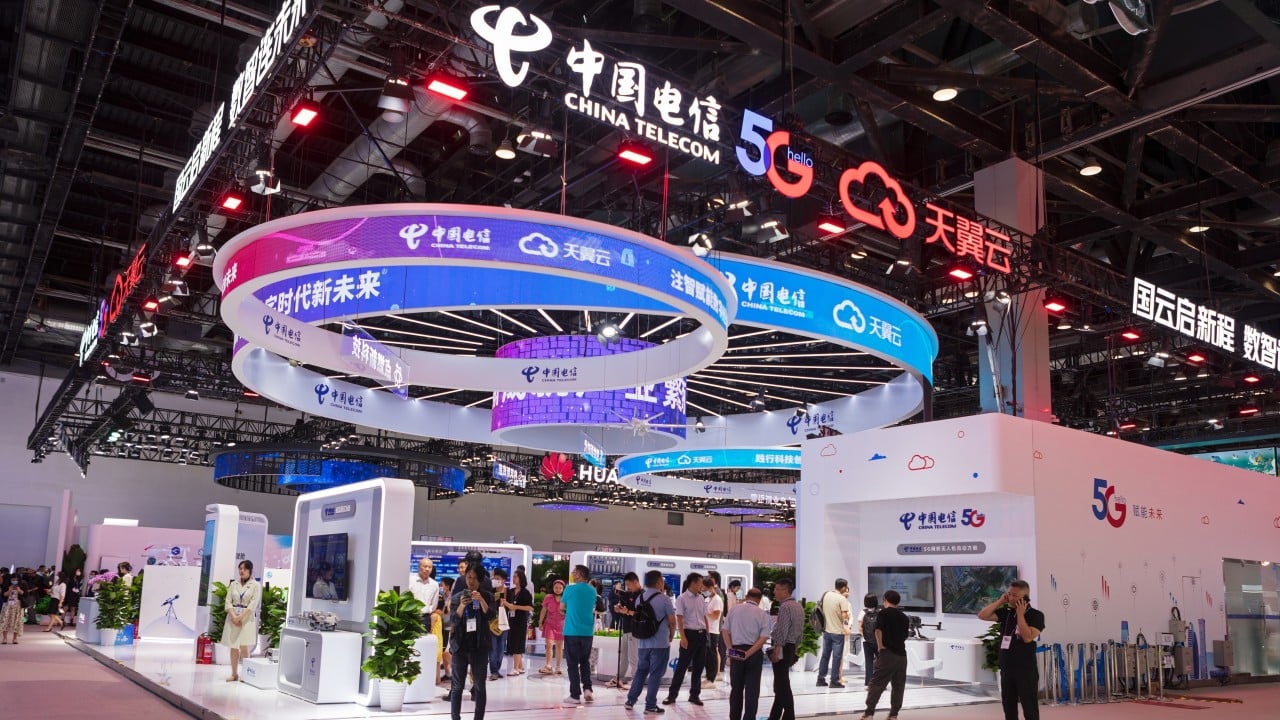
China's three state-owned telecom giants, China Mobile, China Telecom, and China Unicom, are prioritizing artificial intelligence (AI) tokens as a key growth driver in their businesses. As AI adoption increases across the country, these telecom firms see AI and computing operations as crucial growth factors in their first-half financial reports. The three telecom companies highlighted AI tokens as a primary metric, alongside compute power and data.
China Telecom reported a staggering 95% increase in intelligent computing revenue and a 7.1% rise in its broader "intelligent business" revenue to 31.1 billion yuan (US$4.6 billion) during the first half of the year. The company has also launched token packages for mobile users and upgraded its Xingchen TokenHub platform, which hosts 142 large language models and more than 420 industry-specific AI applications. Moreover, China Telecom Cloud revenue rose 7.8% to 61.8 billion yuan.
China Unicom saw a 13% increase in computing-power revenue, reaching 41.9 billion yuan, which comprised data centres, leased compute, business software, and cloud-based AI. Unicom introduced a "token supermarket" as part of its end-to-end ecosystem to create, transfer, store, and use AI tokens. Their UniAI platform connected over 200 large language models and utilized more than 500 terabytes of high-quality data.
Capital expenditure on compute infrastructure surged by more than 80% year on year, accounting for over one-third of the firm's total capex.
China Mobile, which released its financial report on August 13, logged 52.9 billion yuan in computing-services revenue, up 14%, while AI-services revenue increased by 0.9% to 49.3 billion yuan. Combined, computing and AI services made up 22.6% of China Mobile's principal business revenue. High-performance computing revenue used to train and run models grew over 130% to 5.3 billion yuan.
The telecom giants did not disclose stand-alone token revenues, active customer counts, monthly consumption metrics, or profit margins. Despite this, the growth of AI token economy extends beyond telecom operators. Chinese AI solutions provider Phancy Group reported an 860% year-on-year surge in revenue from its application programming interface services, which enable external enterprise applications to connect directly to the AI models hosted by the company.
Token consumption rose about 620% year-on-year. As of March, domestic average daily AI token calls surpassed 140 trillion, up from just 100 billion two years earlier, equivalent to approximately 100,000 tokens per person.
Written by urgent.news from South China Morning Post's reporting — not their text. Machine-written — may contain errors; check the original before relying on it.
This story
This is one outlet's version. Read the fullest account.