China hunts for lunar ice in one of solar system's coldest places
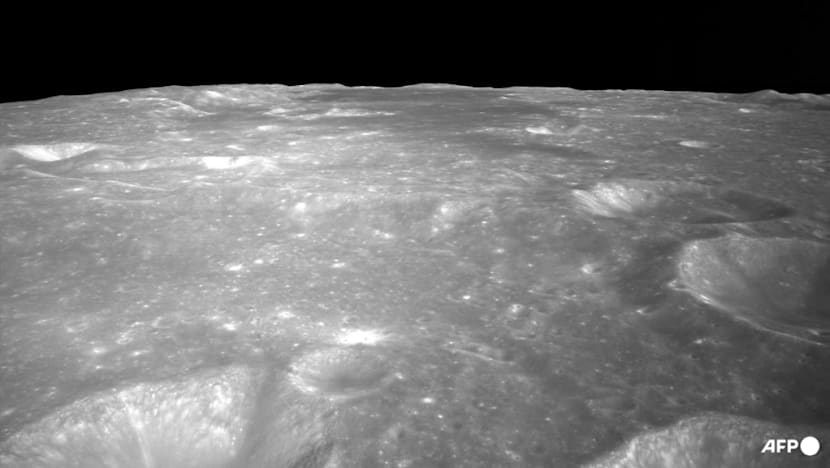
China is set to launch its most advanced lunar mission, Chang'e-7, in its pursuit of discovering frozen reserves of water in permanently shadowed craters near the moon's south pole. This uncrewed expedition, named after a lunar deity, will comprise a robotic lander, rover, and a hopping probe. The mission aims to pave the way for China's aspiration of establishing a permanent human presence on the moon, with a crewed landing planned before 2030 and a joint research station with Russia by 2035.
The spacecraft, scheduled to lift off from Wenchang Space Launch Site in southern Hainan province next week, will be powered by a Long March 5 rocket. Its payload includes sophisticated scientific instruments such as water analysers, cameras, and radars. Upon reaching the moon's orbit, the spacecraft will meticulously evaluate potential landing sites at the south pole before attempting a touchdown.
One of the potential landing locations is near the rim of the Shackleton crater, a permanently shadowed depression. However, the crater's jagged rim is almost continuously illuminated by sunlight. China has not disclosed a timeline for the Chang'e-7 mission, but space analysts estimate a landing attempt around November.
Craters near the moon's south pole have remained untouched by sunlight for billions of years, making them potential deep-freeze repositories of ancient water and volatile organic compounds. Temperatures in these regions can plummet to -203°C. Accessible water is vital for future lunar bases, as it can serve as drinking water, oxygen for astronauts, and even raw material for rocket propellant, thereby minimizing the need for costly resupply missions from Earth.
Unlike most lunar areas where a lunar night lasts 14 Earth days, the high peaks and crater rims near the south pole receive continuous sunlight, making them suitable for a lunar outpost with a stable thermal climate and a steady supply of solar power. China is not the only nation aiming for the moon's south pole; the United States, India, and Russia also have their ambitions set on this captivating lunar location.
Written by urgent.news from Channel News Asia's reporting — not their text. Machine-written — may contain errors; check the original before relying on it.
Also reported by 1 other outlet
- China hunts for lunar ice in one of solar system’s coldest places japantimes.co.jp