Cape Town’s water future under strain
Despite Cape Town's current water levels being stable, rising demand and drier forecasts signal a potential crisis.
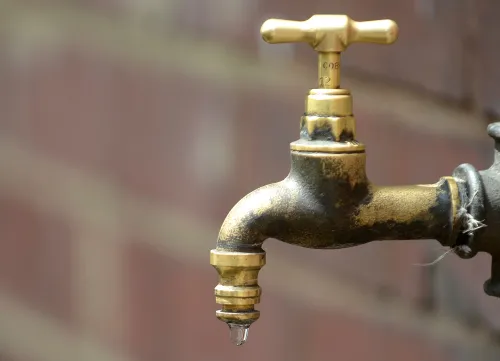
Cape Town's water supply remains safe for now, but city officials warn residents not to become complacent as demand continues to rise and forecasts predict a drier end to the rainy season. As of August 17, the major dams supplying the Western Cape held 77.7% of their capacity, roughly 12.9% below the same point last year. The city's current water consumption is 847 million liters per day, slightly below the winter limit of 860 million liters.
While the city maintains there is no immediate threat to the water supply, the combination of lower-than-average dam levels, uncertain rainfall, and higher-than-targeted demand means restrictions have not been ruled out.
The City's drought-response framework considers dam storage levels to be below 80% by November 1 as an important planning indicator. However, reaching that level does not automatically trigger restrictions, as the city takes into account factors such as consumption, rainfall forecasts, and the broader water supply system before taking action.
The immediate risk to Cape Town's water supply has been assessed as low, but there is a warning: water demand surpassed the city's 1.5% target during the 2025/26 financial year. This increase is largely attributed to an early end to the rainy season, below-average rainfall, and an extended, drier summer. Household water consumption has remained above expectations during the winter months, with usage dropping mainly when it rains.
Seasonal forecasts suggest that below-average rainfall could persist throughout the remainder of the rainy season. The city is closely monitoring the situation and assessing whether low-level water restrictions may become necessary. Mayoral Committee Member for Water and Sanitation Councillor Zahid Badroodien stated that the municipality is taking steps to avoid a repeat of previous drought periods, investing in new water sources and improved management of existing resources.
However, the opposition party, the GOOD Party, questions whether the city is moving swiftly enough to protect residents from future shortages, warning that water restrictions could become more frequent and disproportionately affect poorer and vulnerable communities. The party highlighted delays in major projects intended to boost the city's water supply, including the Paarden Eiland desalination project, Atlantis scheme affected by cable theft, and the revised 2030 delivery date for the Berg River-Voëlvlei Augmentation Scheme.
The City's long-term plans focus on the New Water Programme, which aims to increase the city's peak capacity to 300 million liters of water per day by 2036 through various interventions such as groundwater extraction, additional surface water, water reuse, desalination, and nature-based solutions. Some of these measures are already making a difference.
Since 2019, the Greater Cape Town Water Fund has been clearing invasive alien vegetation from strategic areas, potentially adding an extra 30 million liters of water per day, or about 11 billion liters annually. Groundwater is becoming increasingly important, with the Table Mountain Group Aquifer already operational and production gradually being increased after resolving pumping issues.
The Atlantis Water Resource Management Scheme has been expanded, although production is affected by electrical cable theft. Work on the Cape Flats Aquifer Management Scheme is progressing, with 74 production boreholes completed, and the six-million-litre-a-day Strandfontein West Water Treatment Plant is expected to begin operations soon.
Construction on a 10-million-litre-a-day Hanover Park/Philippi plant is ongoing, with design work nearing completion on a much larger 38-million-litre-a-day Mitchells Plain plant. However, some of the largest future water sources are still years away, with the Berg River-Voëlvlei Augmentation Scheme expected to deliver about 40 million liters per day in 2030, the Faure New Water Scheme potentially providing water in 2031, and the Paarden Eiland desalination project now expected to start delivering water by 2036.
Written by urgent.news from IOL's reporting — not their text. Machine-written — may contain errors; check the original before relying on it.