AI's threat to future jobs considered in landmark NSW compensation decision
In a landmark compensation decision a tribunal has taken into account how AI may create more job market uncertainty in considering a worker's future lost earnings.
In a landmark decision, the NSW Personal Injury Commission considered the potential impact of artificial intelligence on future job prospects when calculating damages for a worker injured in a car crash. The 34-year-old Aldi and home delivery worker, Andrew Duong, suffered $950,000 in damages after the collision on his way to work. Commission member Phillip Carr factored in uncertainties surrounding AI's influence on the job market while determining Duong's future economic loss.
Carr emphasized the need to account for AI's potential effect on the labor market, acknowledging that it could create increased uncertainty for workers like Duong. The tribunal did not conclude that AI directly caused or would cause job losses, but rather noted that it may introduce greater unpredictability in the job market that could disproportionately affect injured workers with specific needs.
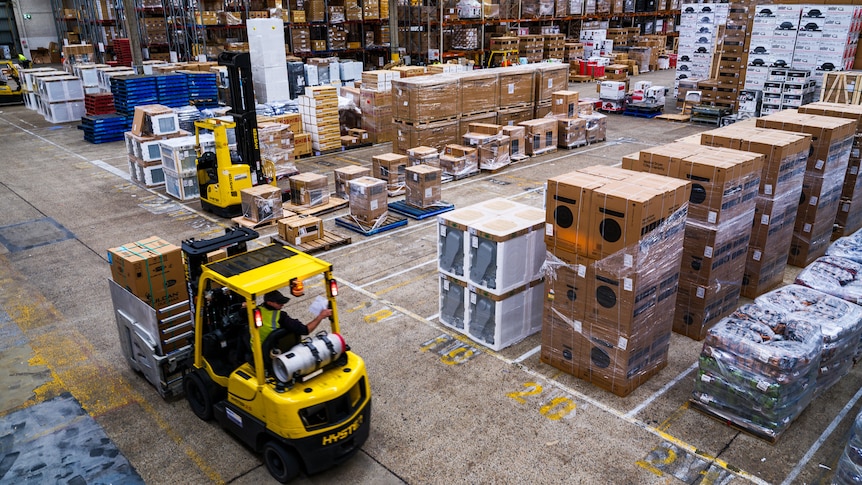
Before the accident, Duong worked approximately 70 hours a week in warehouse roles for Aldi and Home Delivery Service. The crash resulted in injuries to his hands, shoulders, elbows, lower back, and a psychological injury. He underwent two surgeries on his wrist and was later restricted from returning to full-time work at Aldi. Consequently, Duong was employed by the delivery company on reduced hours.
Dr. Leonora Risse, an Associate Professor in Economics at Queensland University of Technology, highlighted the uncertainty surrounding AI's impact on the job market. She pointed out that while AI could bring positive changes to some sectors, it might also lead to negative consequences in others. Risse added that technological advancements always transform work and tasks, altering the skills required in various industries.
The NSW Personal Injury Commission's decision comes after the federal government released its first analysis of AI's influence on the Australian job market. The study found no evidence of broad AI-driven disruption so far, with employment in AI-exposed occupations being about 2% lower than its pre-ChatGPT trend. However, the department cautioned that this data does not prove AI caused job losses, as AI-exposed jobs had already been growing more slowly before the release of ChatGPT.
Written by urgent.news from ABC News AU's reporting — not their text. Machine-written — may contain errors; check the original before relying on it.