When intellectuals respond to the dictates of power
As fiscal strain, budget reallocations and state dominance deepen across Indonesia, students and intellectuals are stepping into the fray—reclaiming their historic duty to speak truth to power.
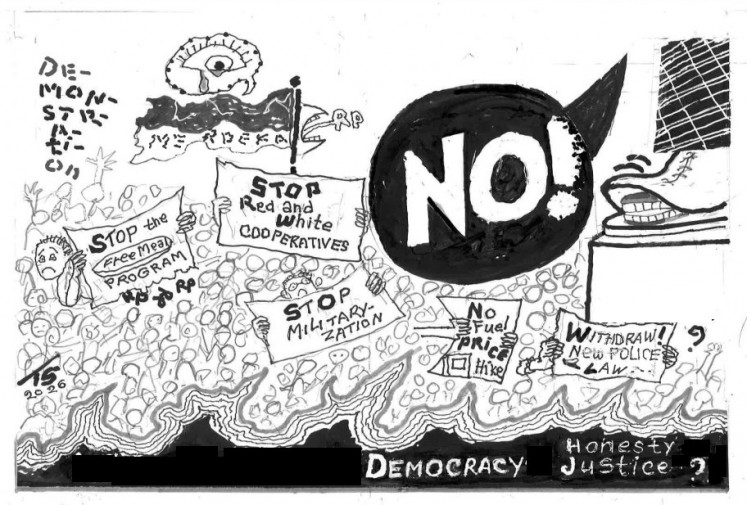
Intellectuals and students in Indonesia are taking a stand against the growing influence of authoritarian power, according to recent reports. This movement is not just about protesting, but about reclaiming a fundamental duty: to speak truth to power. This struggle echoes a century-old warning by French philosopher Julien Benda, who cautioned against intellectuals abandoning their pursuit of truth to become tools of political agendas.
Intellectual traditions from the United States and France support this stance. Noam Chomsky argued that academics have a moral obligation to expose state deception, while Pierre Bourdieu emphasized the role of academic knowledge as cultural capital that can challenge political hegemony. These perspectives are now manifest in contemporary Indonesia, where groups like Indonesia Gelap and the Interdisciplinary Intellectual Forum are stepping up to challenge the status quo.
The fight is taking place amid a backdrop of democratic decay. Civic space is shrinking, political opposition is weak, legal institutions are compromised, and the economy is struggling. Statistics show that over 1.1 million university graduates are unemployed, and heavy layoffs in key industries are reducing household spending power. Despite the government's flagship initiatives like the MBG and the Red and White Cooperatives, economic gains have been disappointing.
The movement's grievances are rooted in these economic realities. Despite promises of job creation and economic multipliers, the results have fallen short. The free meal program has shown weak supply-chain growth, and the cooperatives risk crowding out private investment, which could have fostered sustainable employment. The consequence is a form of populism that promises much but delivers little in terms of real economic improvement.
As the situation unfolds, these intellectuals and students are increasingly vocal, turning universities into platforms for moral resistance against the dictates of power. Their efforts aim to restore the role of scholars as independent critics, rather than mere functionaries of political power.
Written by urgent.news from The Jakarta Post's reporting — not their text. Machine-written — may contain errors; check the original before relying on it.