When an American Airplane Crashed Into a School in 1944, an English Village Lost Almost All of Its Youngest Children. Why Has WWII's Worst Civilian Aviation Accident Been Forgotten?
On August 23, 1944, a test flight over the village of Freckleton, located in northwest England, ended in disaster, claiming the lives of 61 people, including 38 students between the ages of 4 and 6
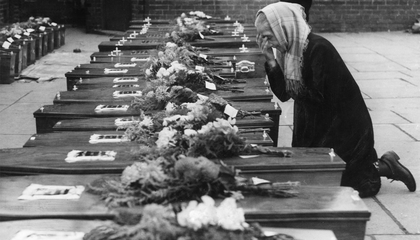
On August 23, 1944, a tragic event unfolded in the English village of Freckleton, forever altering the lives of its residents. The seemingly ordinary morning took a catastrophic turn when an American B-24 Liberator aircraft crashed near the Holy Trinity School, resulting in the deaths of 61 people, including 38 schoolchildren, 2 teachers, and 18 civilians and service members. The youngest victims were just four and six years old, leaving behind a generation of loss that has largely been forgotten.
Nichol, a 13-year-old student, narrowly escaped the tragedy when a teacher reminded him to knock before entering rooms. Ironically, it was this reprimand that spared his life, as he avoided the infants' wing coatroom at the precise moment of impact. The explosion transformed the classroom into a blazing inferno, engulfing the children in flames and debris. Louisa Hulme, one of their teachers, was tragically engulfed in flames, a scene Nichol vividly remembered.
The causes of the accident remain unclear, but it is believed to have been triggered by severe weather conditions. The crash occurred during a routine test flight of the B-24 Liberator, which had taken off from Base Air Depot 2 (BAD2) in the neighboring village of Warton. The depot, part of the U.S. Army Air Forces, was a significant presence in the area, housing over 10,400 American service members who lived and worked alongside the local community.
Known as "Little America," Freckleton was believed to be a safe haven during the war, with many children evacuated from London and other threatened cities. However, the illusion of safety was shattered when the disaster struck.
The Freckleton air disaster stands as one of the deadliest civilian aviation accidents in history, surpassing even the Aberfan mining disaster and the Pan Am Lockerbie bombing in terms of loss of life. Yet, this momentous event has largely been overlooked in both the United Kingdom and the United States, overshadowed by other tragedies and the broader narrative of World War II.
Ruby Currell, one of the surviving young children, has devoted her life to ensuring her lost classmates are remembered, hoping to preserve their brief lives and the legacy of loss that continues to the present day.
Written by urgent.news from Smithsonian's reporting — not their text. Machine-written — may contain errors; check the original before relying on it.