What we lose when we stop seeing migrants as people
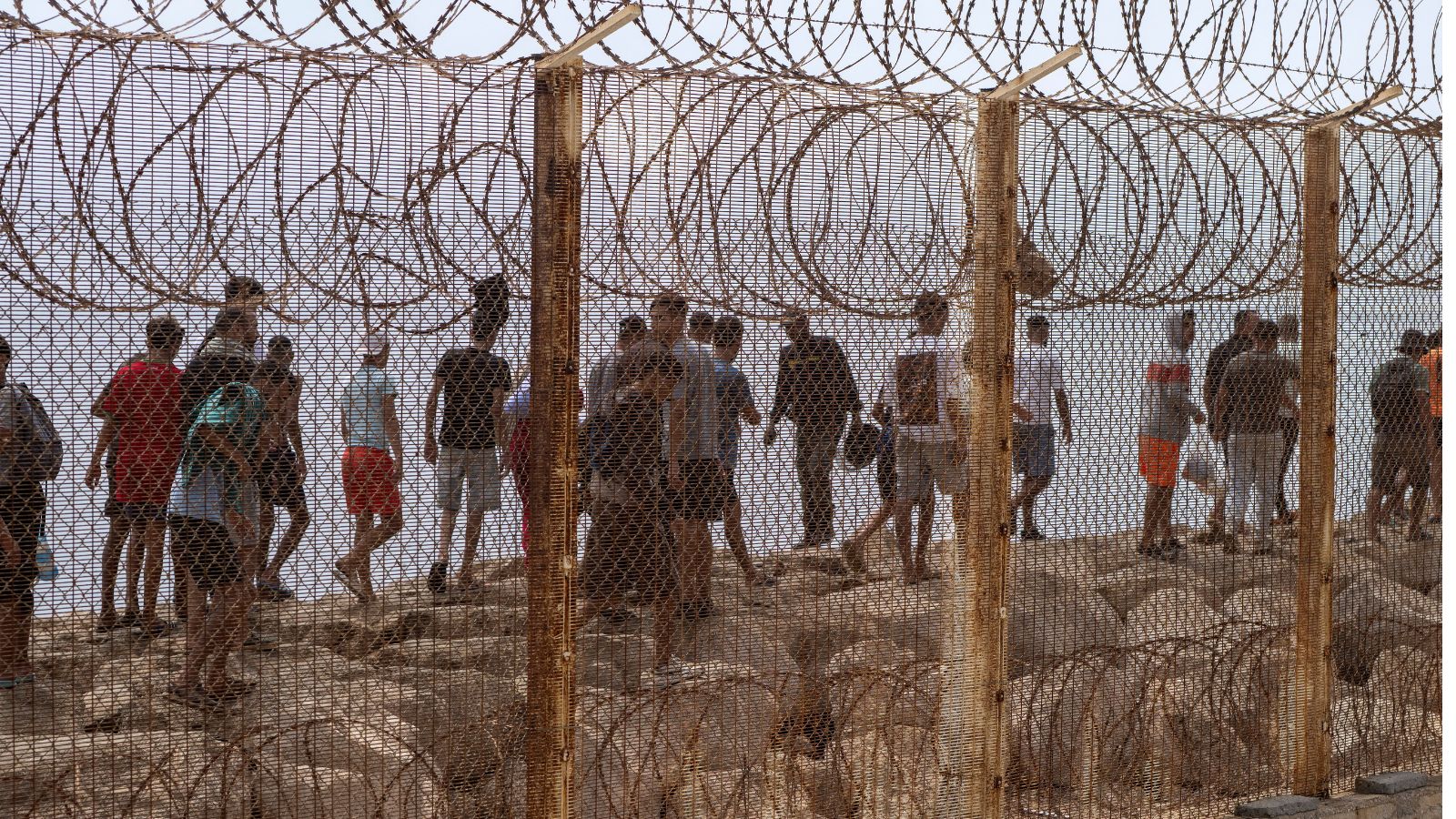
A photograph that has lingered in my mind for days is that of a young girl, roughly my age, donning a football jersey resembling Atlético Madrid's, grinning at the camera with a field and goalpost visible in the background. Faten Ben Omar El Azizi tragically drowned last month while attempting to traverse into Spain's Ceuta enclave.
Playing in Morocco's women's football league and working part-time at a cemetery, she deemed the journey worth the peril. El Azizi is among nearly 150 fatalities or missing persons who tried crossing the Morocco-Ceuta border last month. This incident wasn't an isolated event: according to the International Organization for Migration, at least 3,400 people perished or disappeared while seeking Europe last year.
Naturally, the human response to tragedies like Ceuta is grief, shock, or even anger directed towards the circumstances that compel thousands to risk their lives rather than remain. Yet, the reaction from many European political figures, including Spain's Pedro Sánchez, who deemed the influx a "violation of Spain's territorial integrity," leaves little beyond "security" and "legality."
Italy's Giorgia Meloni referred to it as "illegal immigration," and Germany's Friedrich Merz demanded Morocco reclaim "illegal migrants," emphasizing the necessity to protect the EU's external borders. Similarly, Portugal highlighted the "integrity of the Schengen system," while Finland and Denmark stressed border controls and Schengen.
US President Donald Trump couldn't resist commenting either; he employed the term "invasion." The common theme is the inclination to exclude and vilify. It's argued that crossing a border illegally is unlawful; however, being illegal does not render a human being so, even if this perception has become prevalent. Migrant "illegality" is a status created by states through immigration law and enforcement, not an intrinsic characteristic of the individual.
Migration scholar Nicholas De Genova posits that natural rights of migrants, akin to those of legal residents, are pre-political rights that exist independently of any government. Another frequent counterargument revolves around security and crime, suggesting that illegal immigrants break laws and render host countries unsafe. Yet, empirical evidence contradicts this notion.
Studies examining 21 European nations found no correlation between immigration and violent crime, and research using data from 30 OECD countries revealed no statistical evidence linking increased immigration to rising violent or property crime rates. In the US, research shows that immigrants commit crimes at lower rates than native-born individuals, including those who are undocumented.
The question arises: why have we come to view migration as an aberration requiring swift, aggressive measures rather than as a force that has historically shaped societies? People have traversed for millennia, shaping linguistic and cultural landscapes across continents, long before the modern nation-state insisted on belonging to a specific place, which necessitates permission to enter elsewhere.
Migration has been an ancient human phenomenon, yet today's discourse is confined within a narrow, relatively recent framework centered around borders. Ironically, Europeans were often the migrants themselves, having crossed the Atlantic, settling in the Americas, moving to Australia and New Zealand, traveling across Africa and Asia, and establishing new lives.
Yet, this history is not described using the terminology typically applied to migrants arriving in Europe. European mobility was framed as exploration, settlement, opportunity, or empire-building, even as colonial expansion led to the extermination of indigenous peoples in many regions. Moreover, are we prepared to overlook the fact that European colonialism, interventions, disease, wars, and geopolitical decisions have created many conditions contributing to 21st-century migration?
Syrians, Afghans, Iraqis, Palestinians, and Libyans, among others, did not simply appear at Europe's borders without cause. Their journeys are influenced by wars, political upheavals, economic disparities, and historical relationships in which Europe and the US have frequently played decisive roles. While Western policy is not the sole cause of migration, migration between Europe or the US and the rest of the world cannot be entirely separated from Western intervention and exploitation.
The language we use to describe migration is not abstract; it influences our perception of the migrants themselves and the circumstances that compel them to undertake perilous journeys. Reflecting on El Azizi's death, it exposes not only the limitations of migration policy but also the broader implications of how we describe and treat those who migrate.
Written by urgent.news from The Indian Express's reporting — not their text. Machine-written — may contain errors; check the original before relying on it.