US national debt surpasses $40 trillion as borrowing costs rise
America’s national debt has exceeded $40 trillion for the first time, driven by higher borrowing and interest payments amid inflation and energy price concerns.
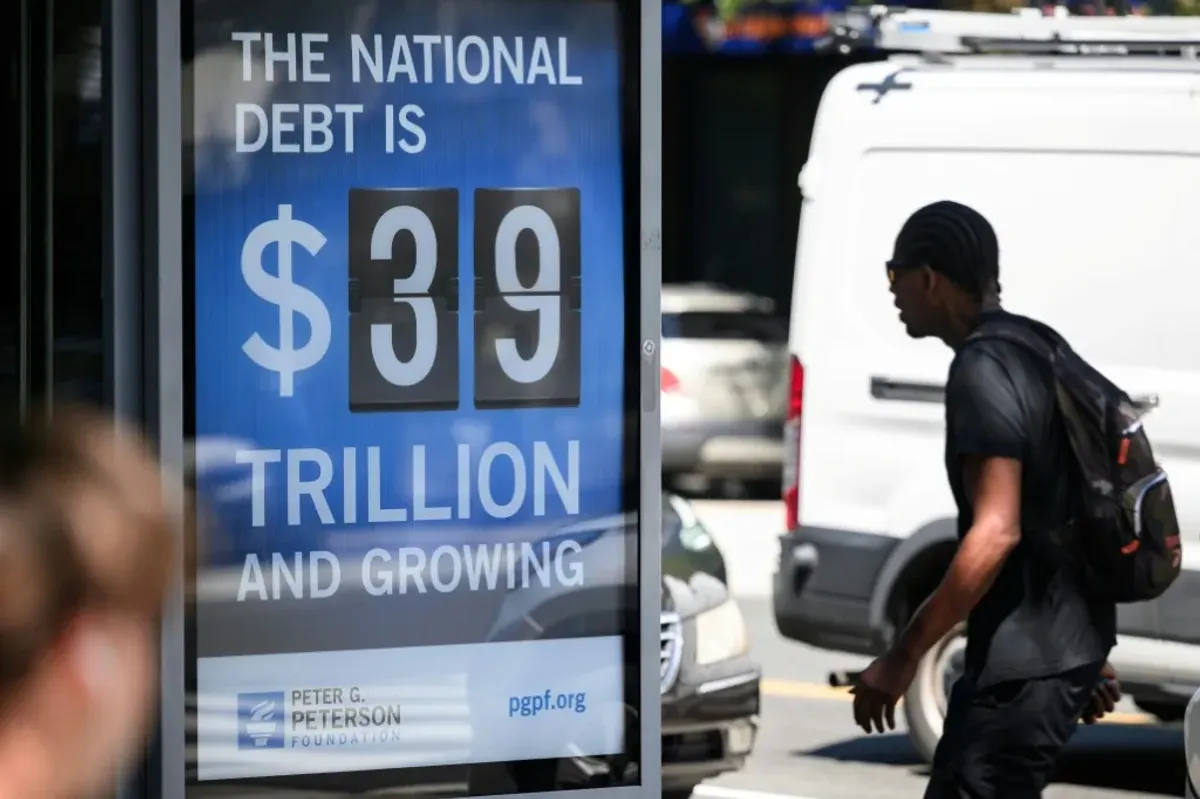
For the first time in history, America's national debt has crossed the $40 trillion mark, according to a recent Treasury Department report. The debt surpassed $40.047 trillion after the issuance of short-term bonds on Tuesday, largely due to increased borrowing for healthcare, Social Security, and other government spending. This growth has outpaced projections made by the Congressional Budget Office, which had predicted the debt would reach $39.4 trillion by the end of the fiscal year.
The rise in debt coincides with a surge in borrowing costs, driven by inflation and higher energy prices. These factors have pushed interest rates to levels not seen in years, with yields on 30-year US Treasury bonds reaching their highest since 2007. In response, the government has initiated larger buybacks of long-term bonds starting in September, aiming to ease interest rates and restore investor confidence.
The current deficit stands at 7 to 8% of GDP, significantly higher than previous deficits of 3 to 4%, raising concerns among financial markets. Democratic Senator Mark Kelly points out that former President Donald Trump's promise to pay off the debt during his first term remains unfulfilled. Republican Senator Rick Scott urges Congress to curb spending and achieve a balanced budget.
Treasury Secretary Scott Besant has set a goal to reduce the deficit to 3% of GDP, but recent developments, including companies reclaiming overturned tariffs, increased military spending, and tax cuts, have widened the deficit gap. Experts caution that while there's no specific debt-to-GDP ratio that triggers a crisis, the growing public debt is a critical economic indicator. Analysts suggest these signals may serve as a warning for financial markets, signaling potential instability if the current trend continues.
Written by urgent.news from Ajel English's reporting — not their text. Machine-written — may contain errors; check the original before relying on it.