Urgent.News

What's breaking now, across thousands of outlets.

Editions

Finance & Markets

US-Bondmarkt: Höchste Rendite seit 2001 für 30-jährige TIPS-Anleihe

In einer neuen Auktion der Regierung wurden die höchsten Renditen seit 25 Jahren erreicht. US-Finanzminister Scott Bessent hat indes ins Spiel gebracht, die Rückkäufe noch zu erhöhen.

US-Bondmarkt: Höchste Rendite seit 2001 für 30-jährige TIPS-Anleihe

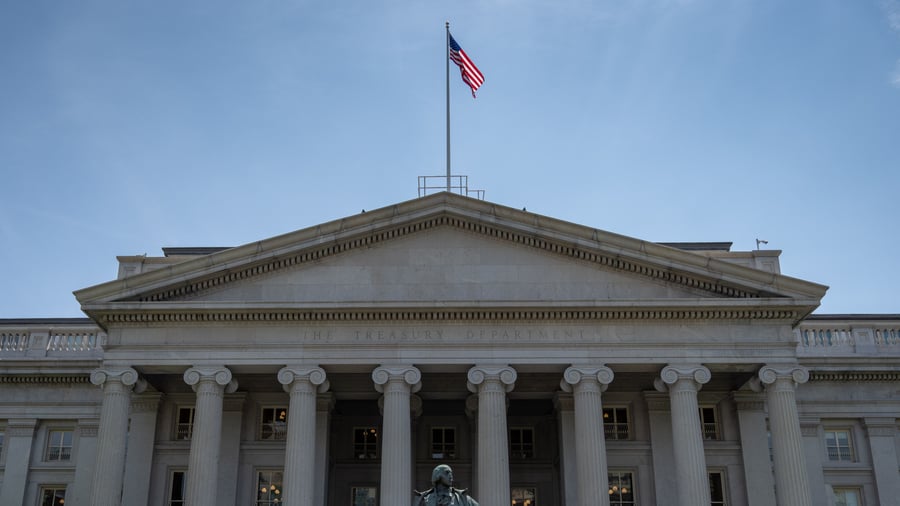
The US Department of the Treasury announced on Thursday a record-high yield for a 30-year Treasury inflation-protected security (TIPS) as part of a series of new bond auctions amid market turbulence. The department increased the 30-year TIPS to $8 billion, which is of interest to investors looking to hedge against inflation risks.

The real yield of 2.973 percent was the highest since 2001. Since the re-introduction of TIPS auctions between 2001 and 2010, the previous peak was 2.650 percent in August last year. A week prior, the 10-year benchmark bond had achieved the highest issuance yields since the 2007 financial crisis. Meanwhile, the nominal 30-year US Treasury bond was also issued at 5.215 percent, also at the highest yield since 2001.

The 30-year Treasury note has already been trading above five percent for over a month on the market. This increases pressure on Treasury Secretary Scott Bressent, whose recent offensive in the bond market has already faded within 24 hours. Bressent had surprisingly announced on Wednesday that he would double the planned purchases of ten-, 20-, and 30-year bonds to at least $4 billion.

He announced new measures on Thursday via CNBC. However, these measures failed to calm investors. Bressent said he would either announce a "stronger focus on budget consolidation" on Friday or early next week. The President, Donald Trump, tasked him and Budget Director Russ Vought with this initiative. He did not provide further details.

US national debt rose to over $40 trillion for the first time on Wednesday evening. The Trump administration initially focused on debt reduction at the beginning of January, with the support of Elon Musk. However, the drastic cut measures barely saved any money and were quickly abandoned. Instead, the deficit worsened, partly due to tax cuts under the "One Big Beautiful Budget" (OBBB) or additional military spending related to the Iran war.

Bressent also emphasized on Thursday that the planned buyback program could exceed $4 billion. The market for 30-year bonds suffers from "very low liquidity" due to the summer months, according to Bressent. "We believe that yields do not reflect the underlying fundamentals," he noted. Bressent's "activist" approach? Several market experts have called Bressent's approach "activist" following his Wednesday announcement and the Yen intervention at the end of July.

"This marks a deviation from the Treasury's long-standing strategy of making regular and predictable announcements," said Thomas Simons, Chief Economist at Jeffries, speaking to Bloomberg. This break from the usual communication strategy could lower the overall credibility of his statements. In the end, it may drive yields even higher.

Investors would then increase the so-called duration premium, which is the additional compensation that market participants demand for taking on higher risks when buying Treasury bonds. Eiko Sievert, a bond expert at the rating agency Scope, argues that Bressent's buybacks do not address the fundamental fiscal challenges of the US, such as increasing budget deficits, growing national debt, and rising interest costs.

The high issuance volume of short-duration Treasury bills, which were sold in high volumes of $110 and $100 billion for four and eight-week terms on Thursday, highlights the Treasury's shift in financing its debt. It increasingly relies on short-term T-bills maturing within a year. The share of short-term debt has risen to 22 percent in recent years.

This approach aims to finance debt more favorably and limit upward pressure on yields of long-term debt by offering a narrow supply at the long end. Ryan Swift, a bond strategist at BCA-Research, warns of an oversupply of T-bills on the market, with early signs already evident. This indicates that the Treasury may need to change course within the next quarters.

Bressent's actions may have added additional nervousness to the market. It is unclear whether the market had already started to calm itself, but Bressent's intervention signaled that the market needed further reassurance.

Written by urgent.news from Handelsblatt's reporting — not their text. Machine-written — may contain errors; check the original before relying on it.

Also reported by 1 other outlet

Read the original at handelsblatt.com →

More in Finance & Markets

More from Thursday 20 August →