Upconverting colloidal quantum dots bring ‘colour vision’ to the infrared
The nanostructures can be incorporated into wearable eyeglasses The post Upconverting colloidal quantum dots bring ‘colour vision’ to the infrared appeared first on Physics World .
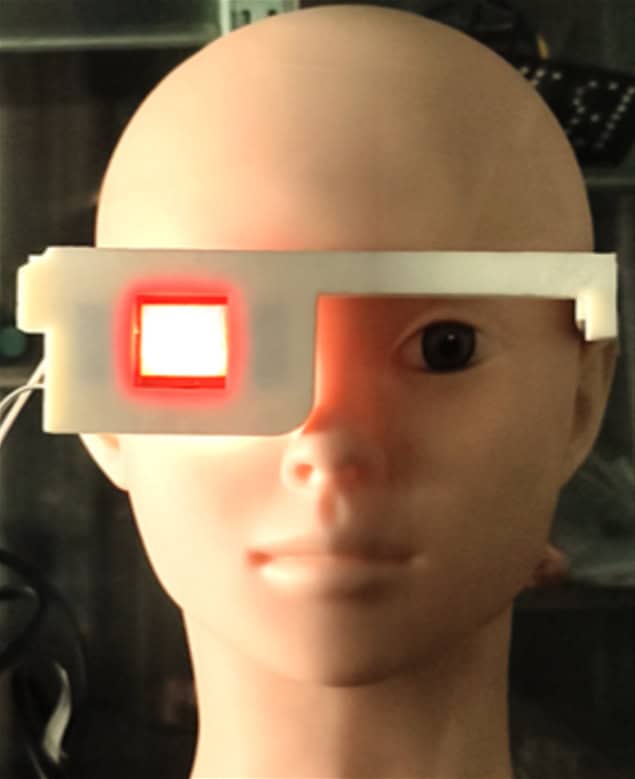
Most people can perceive different colors in the visible range of the electromagnetic spectrum, which spans wavelengths between about 400 and 700 nanometers. However, human eyes cannot see infrared radiation, let alone perceive infrared "colors". Infrared visualization has the potential to reveal invisible features and improve night vision, which relies on infrared light reaching the retina.
A team at China's Beijing Institute of Technology created colloidal quantum dot-based light upconverters that convert infrared light into the visible spectrum while preserving the spectral notion of color. These nanostructures can be incorporated into wearable eyeglasses, potentially allowing users to see infrared light as well as visible light.
The upconverter is designed to align with the electronic subbands of the mercury telluride (HgTe) colloidal quantum dots, enabling seamless transport and recombination of excited carriers when exposed to infrared light. This full-color upconversion could potentially restore visual function across both the visible and infrared spectra, particularly in cases of damaged photoreceptor cells.
Written by urgent.news from Physics World's reporting — not their text. Machine-written — may contain errors; check the original before relying on it.