TTD tests AI-powered robotic dog for wildlife monitoring, devotees safety
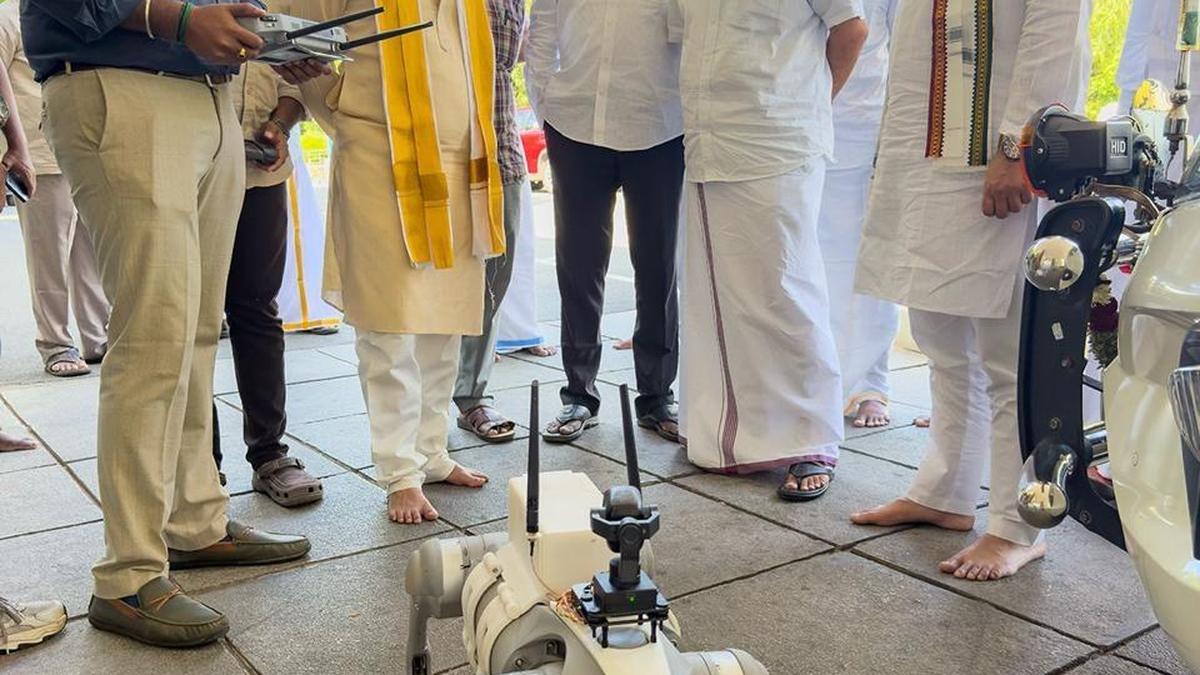
The Tirumala Tirupati Devasthanam (TTD), a prominent religious institution in India, is investigating the use of a quadruped robotic dog to bolster wildlife monitoring and enhance devotee safety in nearby forest regions. During a recent review of the robotic dog's capabilities, officials assessed its potential for effective surveillance in challenging and hazardous landscapes where human access is limited.
The robotic dog boasts advanced features such as optical and thermal imaging cameras, 360-degree LiDAR, multiple sensors, and artificial intelligence. These components enable the robotic dog to detect and track wildlife even in low-visibility conditions, including darkness and fog. Its AI-driven system can differentiate between various entities such as large animals, humans, vehicles, and domestic animals.
Upon detecting wildlife movement, the system generates geo-tagged alerts and transmits live video and thermal feeds to control rooms and patrolling personnel, expediting their response. The Alipiri-Tirumala footpath and surrounding forest areas have been designated as priority zones, where early detection of leopards and other wildlife could prompt timely warnings for devotees and prompt deployment of forest, vigilance, and security teams.
Additionally, the robot's sound and light systems may serve as deterrents, preventing animals from entering pilgrim zones without resorting to physical intervention, thereby potentially reducing direct human-wildlife encounters. The robotic system is intended to supplement existing camera traps, foot patrols, and forest surveillance rather than replace them. Its mobility allows for swift deployment to areas experiencing increased wildlife activity.
The data collected by the robot, including video footage, thermal imagery, and movement patterns, can aid wildlife behavior analysis, assist the TTD in optimizing patrol schedules, and inform surveillance deployment in critical areas.
Written by urgent.news from The Hindu's reporting — not their text. Machine-written — may contain errors; check the original before relying on it.