Tracing Ashoka in Ujjain: What fresh dig at Vaishya Tekri ‘stupa’ can and cannot reveal
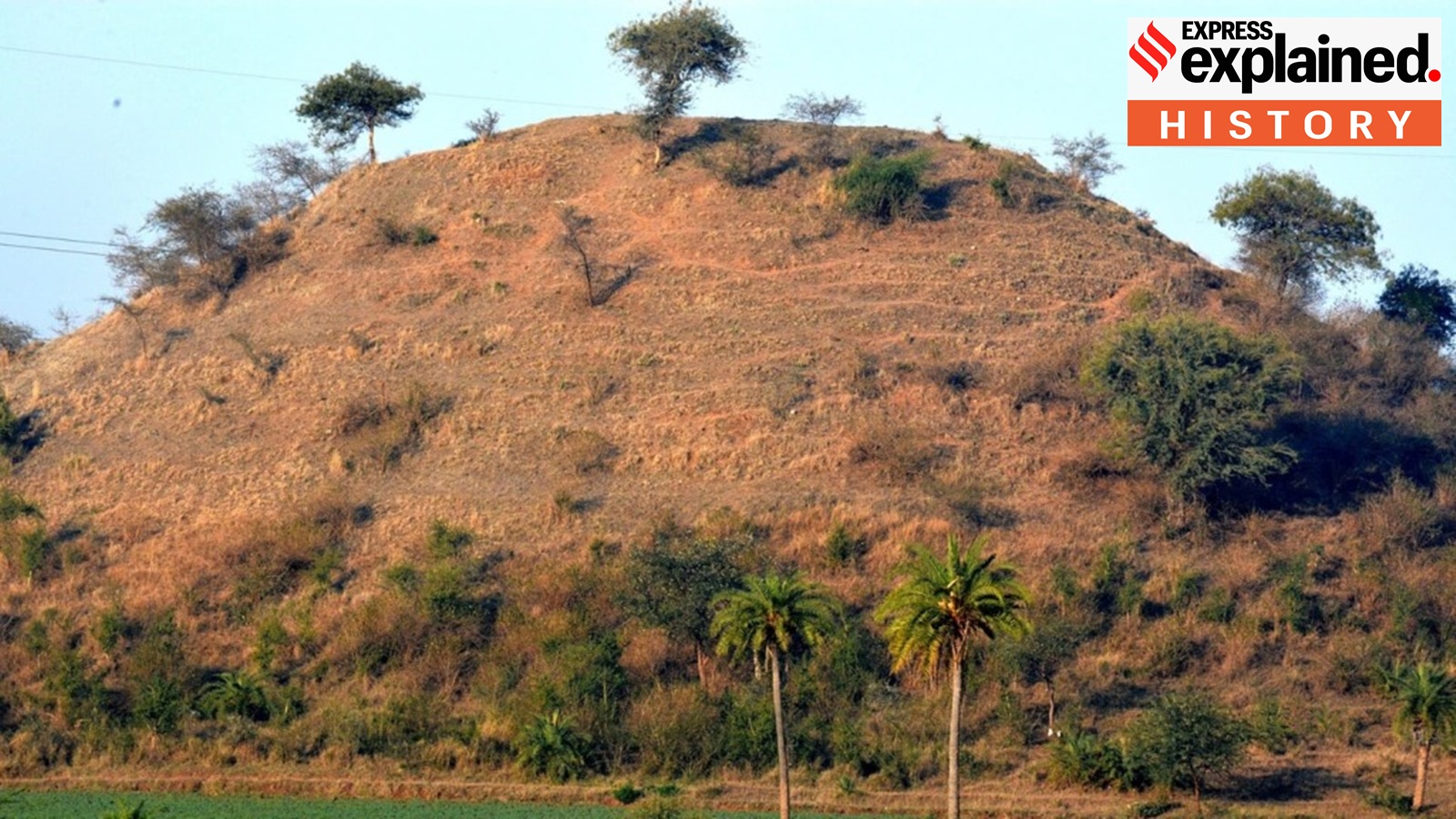
The Madhya Pradesh government has commenced restoration efforts on Buddhist monuments linked to Mauryan emperor Ashoka, commencing with an excavation at Vaishya Tekri. In 2011, Peter Skilling noted that the largest stupa, colloquially known as Vaishya Tekri, measures approximately 350 feet at its base and 100 feet in height. Adjacent to it is a smaller stupa, known as Kumbhar or Kumhar Tekri.
Both structures remain largely undisturbed, except for the presence of a power line and a tall pylon close to Kumbhar Tekri. Initial excavations conducted by the Department of Archaeology during the 1938-1939 period revealed large bricks and punch-marked coins, leading archaeologists to date the structures to the Mauryan period.
However, Himanshu Prabha Ray cautions against premature conclusions, stating that the 1938-1939 excavation report is outdated and its interpretation may have been influenced by earlier accounts, particularly those of Alexander Cunningham. Ray emphasizes that further investigation is necessary beyond the initial findings. Ashoka resided in Ujjain, situated on the Sipra River and considered a major commercial hub, from 282 BCE until his father Bindusara succumbed to illness and returned to Pataliputra.
Ujjain, then known as Ujjayini, served as the capital of the Mauryan province of Avanti and played a pivotal role in trade routes connecting western coasts like Broach and Sopirà with Pataliputra. Historian Romila Thapar speculates that Ashoka's time in Ujjain was not merely a brief stay, but rather an extended period of about a decade, during which he functioned as the viceroy.
Historian Nayanjot Lahiri elaborates that Ujjain held great significance for Ashoka, likening the city to "Greenwich of India" due to the city's role as the basis for Hindu astronomical calculations of longitude. According to Lahiri, Ashoka visited Ujjain around 282 BCE, approximately a decade before his father's demise. Local traditions in Sri Lanka associate Vaishya Tekri with Devi, Ashoka's wife, who was the daughter of a merchant from Vidisha.
This connection is based on the name Vaishya Tekri, which signifies the mound of the Vaishya caste, reflecting Devi's Vaishya heritage.
Written by urgent.news from The Indian Express's reporting — not their text. Machine-written — may contain errors; check the original before relying on it.