The shareholder state is making a comeback
The question confronting policymakers is no longer whether governments should own corporations, but how they should govern them.
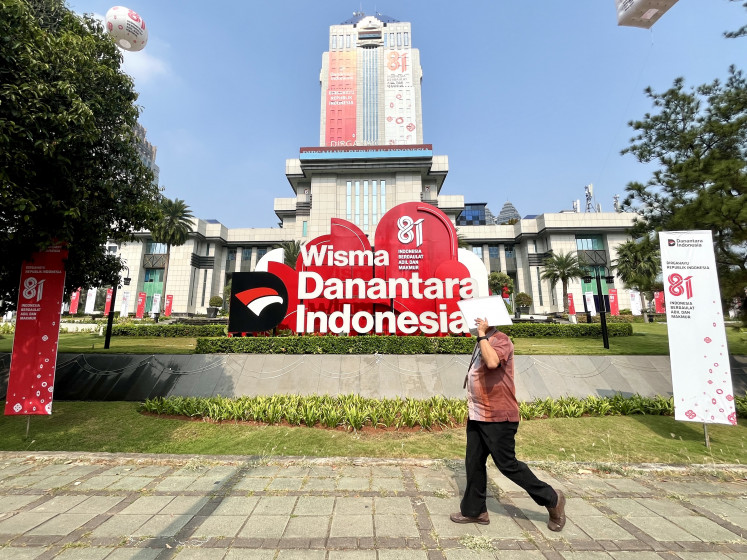
The debate surrounding governmental ownership of corporations is shifting from whether states should own businesses to how governments should manage them. Across the globe, nations are rethinking ownership as a tool for economic policy. From America's industrial strategy to Beijing's state-owned enterprises (SOEs) and sovereign wealth funds in Asia, governments are increasingly acting as strategic shareholders, not just regulators.
This shift represents a notable reversal from the post-Soviet privatization era of the 1990s, when governments were encouraged to minimize ownership and SOEs were expected to operate more like private companies. The prevailing shareholder-oriented model was once considered the ultimate outcome of corporate governance evolution, highlighted in influential essays by Henry Hansmann and Reinier Kraakman.
However, this consensus was challenged by subsequent academic research emphasizing investor protection and private ownership as crucial foundations for economic development. Despite these developments, the broad consensus suggested that convergence in corporate governance systems would never be complete due to varying political contexts and ownership structures.
China offers a clear example of this institutional divergence. Instead of privatizing strategic enterprises, Beijing opted for corporatization, introducing market incentives and retaining ultimate state control while separating ownership from day-to-day management through the State-owned Assets Supervision and Administration Commission (SASAC).
While modern state capitalism has faced criticism for issues like political intervention, inefficient capital allocation, and distorted competition, it also challenges the assumption that state ownership is inherently incompatible with commercial performance. More strikingly, governments worldwide are increasingly recognizing the strategic value of ownership, regardless of their political systems and legal traditions.
In the United States, national security considerations are reshaping policies, with the government taking equity stakes in critical industries and imposing revenue-sharing conditions on corporations. Similarly, China's SOEs remain a prominent example of strategic state ownership, while other nations like Indonesia and Singapore are experimenting with state-owned asset funds and professionally managed SOEs, respectively.
The challenge for governments is how to govern the corporations they own, as simultaneously acting as shareholder and regulator creates unique governance challenges. International standards emphasize the need to separate these roles to prevent political objectives from overriding commercial judgment, promoting board independence, managerial autonomy, accountability, and commercial decision-making.
As geopolitical competition intensifies, the question is no longer whether corporate governance systems will converge but how governments will increasingly leverage ownership as an instrument of economic policy.
Written by urgent.news from The Jakarta Post Academia's reporting — not their text. Machine-written — may contain errors; check the original before relying on it.
This story
This is one outlet's version. Read the fullest account.
- The shareholder state is making a comeback thejakartapost.com