The Fedorov protesters lost. But they backed a man for what he built, not what he promised—and that may be new in Ukraine.
For twenty years, Ukrainians voted for the biggest promises. This summer they marched for a record instead—and a scholar thinks that's the real story.
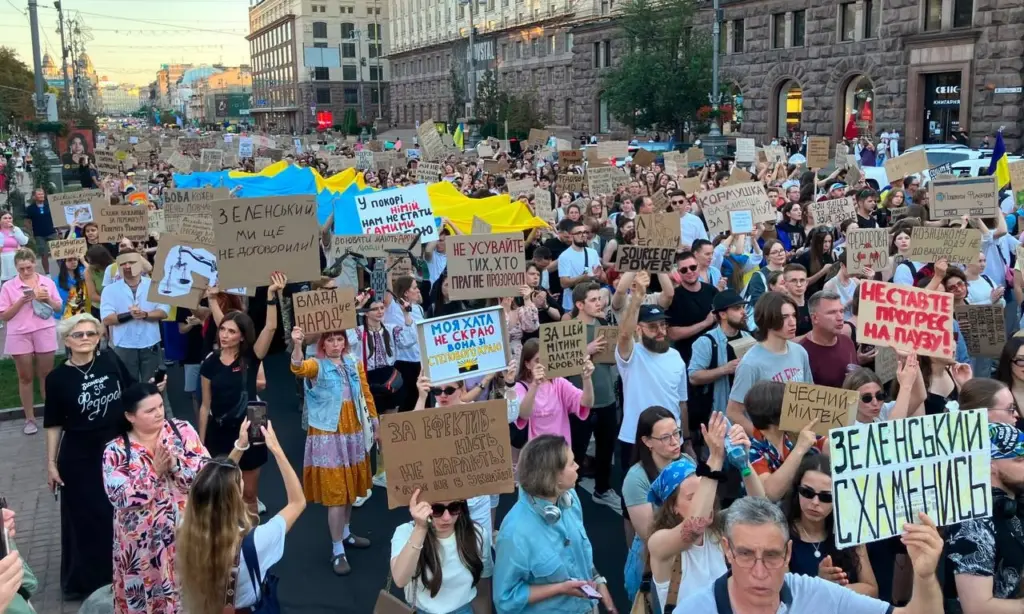
On 19 August, Dmytro Koziatynskyi, a veteran and civic activist, thanked all those who participated in the month-long protests aimed at reinstating Mykhailo Fedorov as defense minister. Koziatynskyi, one of the organizers of rallies in Ukrainian cities, believed the protests were worth it. Fedorov, a reformer who exposed defense overspending and built drone programs, was dismissed on 14 July, sparking the protests.
The protests ended when Parliament voted to appoint Yevhenii Khmara as defense minister, and President Zelenskyy did not meet the protesters' main demand, which was to reinstate Fedorov. Koziatynskyi acknowledged that the lack of communication between authorities and society may have been the root cause of the protests. Political scientist Anatolii Romaniuk from Ivan Franko National University in Lviv suggested that the protests may have marked the beginning of a broader shift in Ukrainian society.
Romaniuk observed that Ukrainians had been prone to buying into unrealistic populist promises from politicians for years, which he calls a "political curse." However, the protesters backed Fedorov not because of what he promised, but because of what he had already accomplished—such as auditing $7.2 billion in defense overspending and building drone programs.
If this shift in perspective continues, Ukrainian society might escape the cycle of populism that dominated the 2019 elections, according to Romaniuk.
Written by urgent.news from Euromaidan Press's reporting — not their text. Machine-written — may contain errors; check the original before relying on it.