Russia diverts defense-industry chemicals to gasoline—but stations still run dry
A July decree sent defense-industry chemicals to the fuel pump; motor oil prices have since spiked 40%, and Rosgvardia is patrolling gas stations in Moscow Oblast.
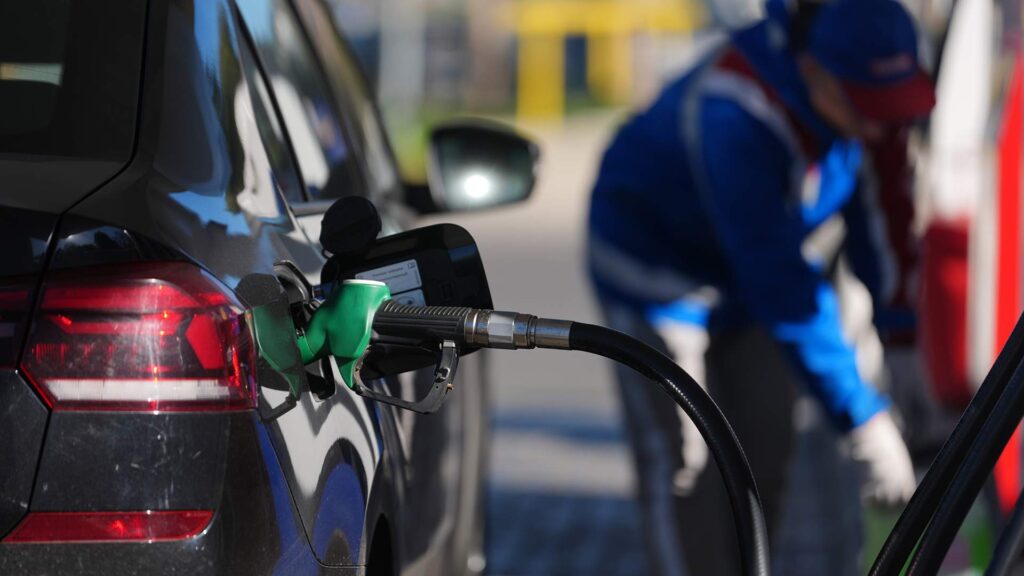
Last week, Russian gas stations had gasoline available at only 28% of locations, a significant decline from 41% the previous week, even though a government decree in July permitted refineries to divert industrial chemicals, including defense-related ones, into fuel production. This diversion led to motor oil shortages and prompted a government commission to convene in mid-August to reconsider the decision, but they could not reach an agreement.
The International Steel and Metals Institute (ISW) reported on 19 August that the diversion is now siphoning raw materials from industrial supply chains.
On 17 August, Izvestia reporters checked 21 gas stations in Moscow and Moscow Oblast and found that only seven sold AI-92 gasoline, while five sold AI-98. Gazprom Neft has reintroduced purchase limits, allowing customers to buy a maximum of 40 liters at automated pumps and 60 liters at staffed pumps, according to RBC.
India recently provided Russia with a tanker of gasoline in Murmansk, initially priced at 130,000 rubles ($1,550) per ton, which is nearly double the domestic market rate of 73,000 rubles ($870) per ton. The targeted chemicals—benzene, toluene, xylenes, and phenol—are used to create various industrial products, such as rubbers, plastics, and synthetic materials for defense applications.
A government decree signed on 2 July allowed refineries to blend these intermediate refinery products into gasoline as an octane booster. The ISW estimated on 19 August that the diversion is now depleting raw materials from industrial supply chains.
The consequences of using lower-grade fuel are visible in the rising prices of motor oil, which has increased by 15-20% since January, with some products experiencing price hikes of up to 40%. Some imported brands have even doubled in price, according to Kommersant on 19 August. Dmitry Prokofiev, director of external communications at NEFT Research, explained that the lower-grade Euro-2 and Euro-3 fuel now commonly available at Russian gas stations wears down engines faster and necessitates oil changes 1.5 to 2 times more frequently.
Drivers are forced to replace their motor oil more often, but the raw materials that would have been used to produce this oil are being redirected towards increasing gasoline production.
Written by urgent.news from Euromaidan Press's reporting — not their text. Machine-written — may contain errors; check the original before relying on it.