‘Race against time’ to rescue Alabama Civil Rights landmark
Selma’s long-abandoned Edistone Hotel, witness to 170 years of African American history, was recently saved by a non-profit devoted to protecting Black historical sites
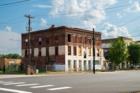
The Edistone Hotel in Selma, Alabama, has a rich history dating back to 1855, standing witness to numerous pivotal moments in American history. Once a grand three-story brick building, it fell into disrepair following the decline of Selma's industries and population. Recently, the Conservation Fund acquired the hotel, part of their Legacy Places Initiative focused on preserving African American heritage sites at risk of disappearing due to development or demolition.
The Conservation Fund, known for land acquisition and conservation, has previously saved other significant sites, such as Zora Neale Hurston's home in Florida and the Mifflin House in Pennsylvania, which was part of the Underground Railroad. Phillip Howard, director of the Legacy Places Initiative, explained that while the Fund is not the long-term owner, they aim to stabilize the building and then hand it over to community partners to decide its future design and purpose.
Black American heritage sites are often under-represented in preservation efforts. A 2020 report by the National Trust for Historic Preservation's African American Cultural Heritage Action Fund revealed significant under-representation of African American neighborhoods across the US. Recent events, such as the Trump administration's 2025 executive order, have further exacerbated this issue, leading to the removal of panels on slavery at the President's House Site in Philadelphia.
The Edistone Hotel, located near the Edmund Pettus Bridge, another historic site in Selma, is of particular importance. This bridge was the site of "Bloody Sunday" during the 1965 Voting Rights Movement, where law enforcement attacked peaceful protesters. The Conservation Fund's acquisition of the Ben Moore Hotel in Montgomery, another Civil Rights landmark, highlights their commitment to preserving these crucial sites.
Sarah Aghedo, executive director of the Selma Redevelopment Authority, described the Edistone as a "rare full-circle historic site," representing the century-long journey from the Civil War to the Civil Rights Movement. The hotel was initially built on land used for slave auctions but transformed into a Freedmen's Bureau office post-Civil War, later providing equal accommodations for all patrons in the 1870s.
Currently, the Edistone faces threats, as listed by the Alabama Historical Commission as one of the "Places in Peril" in 2022. The building had fallen victim to a 2023 tornado, which caused significant damage. The Conservation Fund's initial steps included removing debris and planning for stabilization and documentation, with further work funded by a 2022 grant from the National Trust.
In collaboration with the City of Selma and architects Model of Architecture Serving Society (Mass), the Conservation Fund envisions a future that blends preservation with community revitalization. Mass, known for projects promoting justice and human dignity, has proposed transforming the Edistone into a gathering place offering resources like a grocery store and co-working space, alongside historical storytelling.
Jha D Amazi, a principal at Mass, emphasized the importance of preserving these sites for productive purposes, ensuring they remain vital to the community rather than mere relics.
Written by urgent.news from The Art Newspaper's reporting — not their text. Machine-written — may contain errors; check the original before relying on it.