Ports at tipping point
KUALA LUMPUR: Malaysia must address bottlenecks across its entire maritime logistics and supply chain ecosystem or risk constraining its ability to capture growing trade flows into Asean, industry experts said.
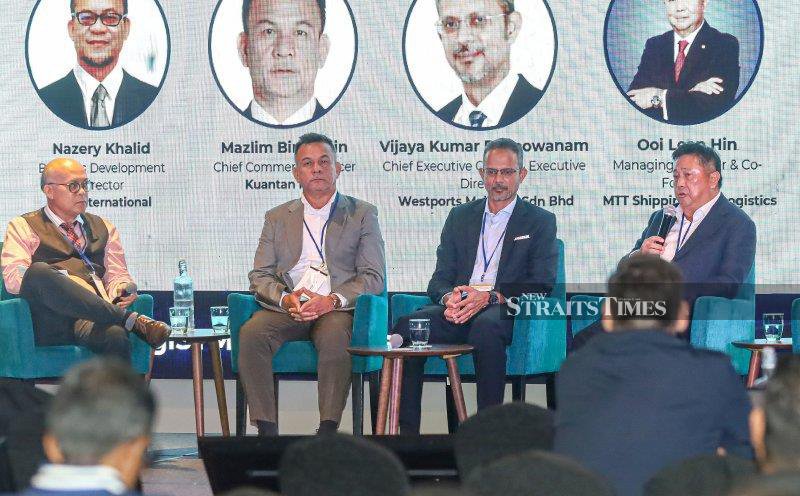
Malaysia faces a critical juncture in its maritime logistics and supply chain ecosystem, as industry experts warn that bottlenecks could constrain the country's ability to capitalize on the growing trade flows into ASEAN. Ooi Lean Hin, managing director and co-founder of MTT Shipping and Logistics Bhd, emphasized that ASEAN has become a major beneficiary of shifting global trade patterns, with China diversifying its markets away from the West.
However, rising cargo volumes will place increasing pressure on Malaysia's ports and the wider network supporting them, including trucking and drayage services.
To accommodate this anticipated growth in cargo volumes, Ooi stressed that capacity expansion must extend beyond merely building larger ports. He advocated for a holistic approach that addresses weak points throughout the entire logistics chain, recognizing that the Malaysian government must assess the entire ecosystem where issues arise at ports or drayage services. While expanding port capacity is essential, Ooi highlighted that this alone is insufficient if the broader ecosystem cannot support it.
Kuantan Port's chief commercial officer, Mazlim Husin, echoed these concerns, stating that the port is prepared to expand capacity in the future to meet growing demand. The port currently operates with two basins, with the second basin capable of accommodating more yachts, boats, and basins. Mazlim expressed confidence that Malaysia's ports will need to increase their capacity in the future to manage rising trade volumes.
Westports Malaysia Sdn Bhd's CEO and Executive Director, Vijaya Kumar Puspowanam, expressed confidence in the company's ability to add capacity, particularly at Westports 2, which is set to double annual handling capacity from 14 million twenty-foot equivalent units (TEU) to 28 million TEU. Puspowanam acknowledged that port congestion can be exacerbated by maintenance work, but he remains optimistic about the industry's capacity to meet future growth demands over the next 15 years.
Written by urgent.news from New Straits Times's reporting — not their text. Machine-written — may contain errors; check the original before relying on it.