No home to return to: Assam’s flood victims face harder fight after waters recede
Assam's floodwaters have receded, but families face immense challenges rebuilding their lives. Destruction of homes and essential supplies marks the beginning of a new struggle. The government is assessing damage and providing initial financial assistance to affected households. Restoring livelihoods and infrastructure remains a significant hurdle for many residents. The long-term recovery…
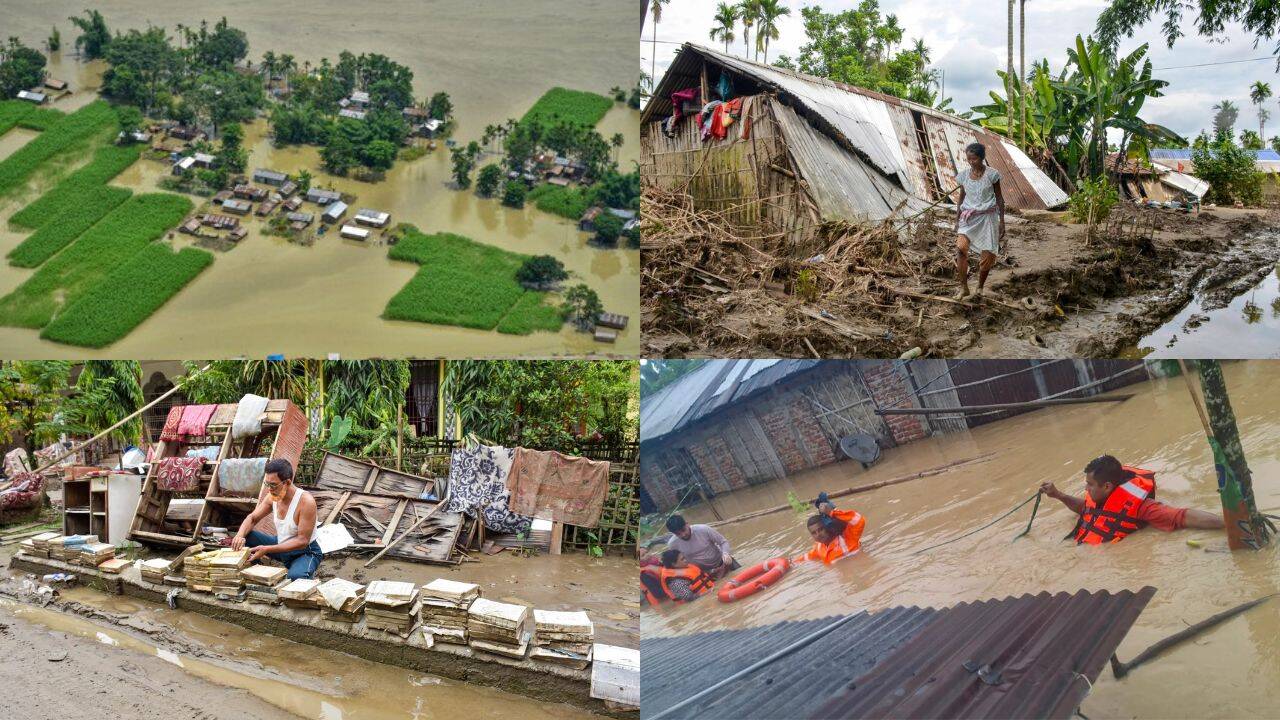
Guwahati: Flood survivors in Assam's Sivasagar district faced a daunting task as their homes vanished beneath the receding waters. A family that had labored for years saving money and storing grain now confronted an empty house, with 20 quintals of grain lost and household items damaged or washed away. They initially stayed with relatives and later moved into a rented room, realizing the enormity of their losses.
The receding floodwaters in Assam unveiled a different kind of crisis - the struggle to rebuild lives after the waters receded. For families who had lost their homes, food stocks, furniture, and farming resources, the aftermath was far from a return to normalcy. Today, they faced the daunting task of cleaning homes, finding new residences, replacing essential items, restoring livelihoods, and awaiting financial aid.
Official figures revealed that 105 people had died due to flood-related incidents in Assam this year, with nearly 32,000 people across five districts still affected. Sivasagar reported the highest number of fatalities with 53 deaths, followed by Charaideo with 22 and Jorhat with nine. Over 3,198 hectares of crop area remained submerged, yet these statistics failed to capture the personal devastation endured by individual families.
For those who had stored paddy for months, the destruction of grain meant a loss of both food security and a source of income. Replacing furniture, appliances, utensils, and clothing proved challenging for families already grappling with the aftermath of the disaster. Some villages were still grappling with cleaning and repairing their homes, as walls, floors, and belongings were either damaged or too damaged to be of use.
The transition from rescue to rebuilding posed an uncomfortable gap for many. While rescue operations provided immediate relief, the challenge of rebuilding remained daunting. The Assam government acknowledged this, launching a rapid damage assessment drive and planning to assess damage in multiple stages. However, for families whose homes were completely destroyed, the assistance provided so far only marked the beginning of an arduous journey.
The government was also exploring long-term housing solutions, including a possible model housing scheme for families whose houses were entirely damaged. In the worst-hit areas, nearly every house had suffered damage, and the state had allocated funds for rebuilding Anganwadi centers and distributing seedlings to help farmers resume cultivation.
The disruption extended beyond homes, affecting schools and transportation. In Jonai, students had to cross the Kemi River using boats after a vital iron bridge was washed away, impacting their daily routines and attendance. The flood had transformed a river into a barrier, highlighting the infrastructure challenges that needed urgent attention.
The flood disaster exposed a critical gap in the recovery process - the transition from immediate relief to long-term rebuilding. While the water may recede, the chain of losses continued, with families facing the daunting task of rebuilding their lives. The government's efforts to assess damage and provide aid were commendable, but the challenge lay in ensuring that families could truly return to normalcy, rather than merely surviving the aftermath of the floods.
Written by urgent.news from Times of India's reporting — not their text. Machine-written — may contain errors; check the original before relying on it.