Urgent.News

What's breaking now, across thousands of outlets.

Editions

Science

NASA's Attempt to Boost the Swift Observatory Falls Short, but There's Still Much to Learn From the Mission

Learn more about the attempt to rescue Swift and what will come next after it was unsuccessful.
NASA's Attempt to Boost the Swift Observatory Falls Short, but There's Still Much to Learn From the Mission

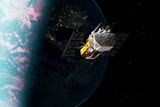
The Neil Gehrels Swift Observatory, known as Swift, is a NASA satellite designed to study various cosmic events. With a weight of around 1.5 tons, Swift is in low Earth orbit and is subject to drag from Earth's atmosphere and solar activity, which is causing it to re-enter the planet's atmosphere. NASA and Katalyst Space partnered to create a robotic spacecraft called LINK, which was intended to boost Swift into a higher orbit.

However, their intended mission to capture and boost Swift did not succeed. Despite this setback, both organizations still plan to collect valuable data from the mission, which could be useful for future projects. Swift is expected to re-enter Earth's atmosphere by late 2026, though NASA might intervene. The satellite's mission may come to an end, but NASA aims to study its data and leverage ongoing missions to gather additional information until a replacement is found.

NASA Administrator Jared Isaacman emphasized the importance of taking risks for significant returns, even if the desired outcome isn't achieved. He also highlighted the team's speed, innovation, and dedication in the face of challenges.

Written by urgent.news from Discover Magazine's reporting — not their text. Machine-written — may contain errors; check the original before relying on it.


Read the original at discovermagazine.com →

More in Science

What Is the Sun’s Role in Climate Change?

This informative NASA article explains the solar cycle's impact on Earth's climate, offering teachers a ready-to-use reading assignment for advanced science units.

  • Sun's solar cycle influences Earth's climate by altering solar energy received.
  • Solar cycles serve as educational resource for advanced science units.
  • Students analyze solar cycles vs historical climate data to understand Sun's role.

Native femoral geometry reveals consistent distal and posterior offsets with variable anterior compartment: a morphometric analysis

Scientific Reports, Published online: 21 August 2026; doi:10.1038/s41598-026-67656-x Native femoral geometry reveals consistent distal and posterior offsets with variable anterior compartment: a…

  • Native femoral geometry analyzed with focus on offsets between compartments
  • Distal and posterior femoral condyles form coherent unit approximated by single radius
  • Anterior compartment shows weak connection to flexion arc, suggesting need for asymmetric implants

What’s the Difference Between Weather and Climate?

This informative article from NOAA clearly explains the fundamental differences between weather and climate for classroom instruction. The post What’s the Difference Between Weather and Climate?

  • Weather refers to day-to-day atmospheric conditions
  • Climate pertains to long-term patterns and averages
  • NOAA provides educational article on the topic

More from Thursday 20 August →