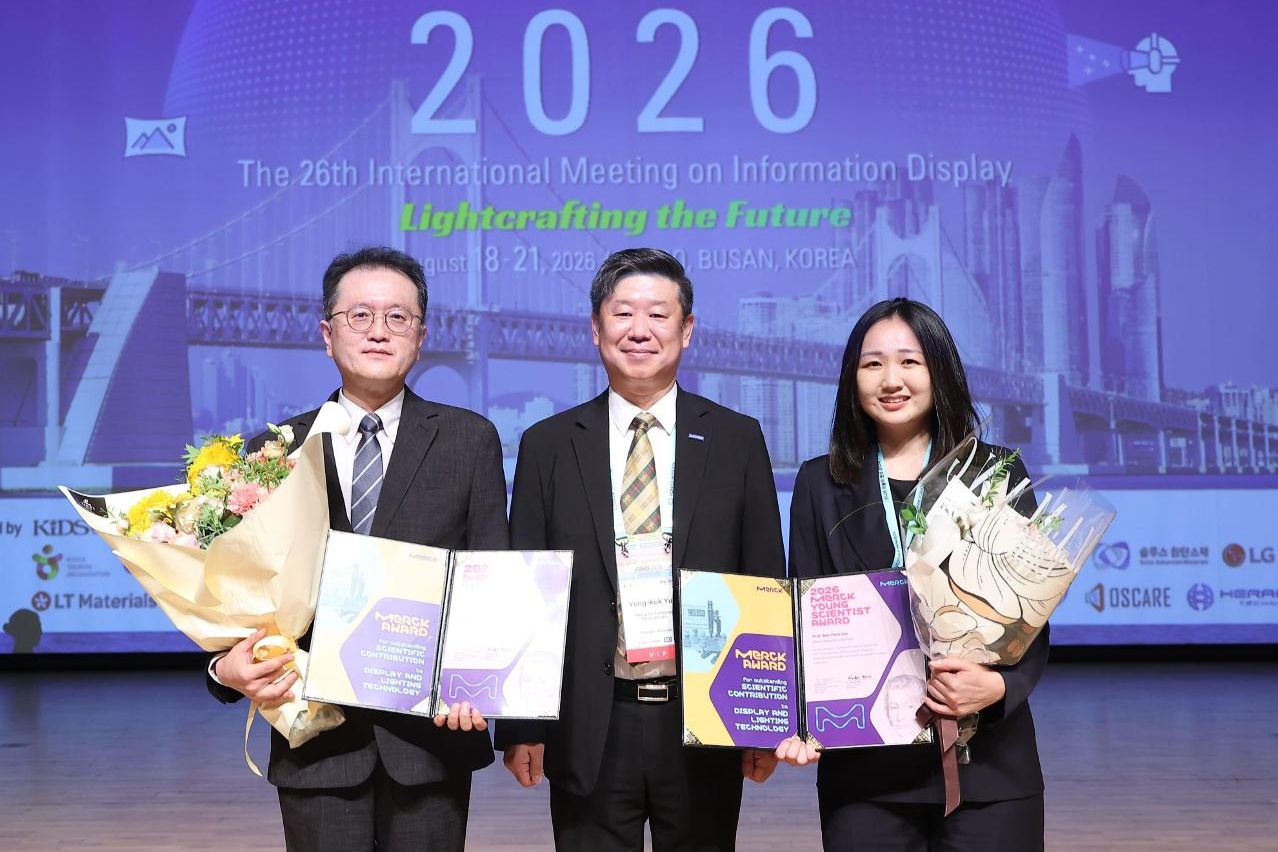
Merck honors Korean scholars for display technology breakthroughs in AI era
Two Korean professors whose research could help redefine how displays work in an artificial intelligence (AI)-driven era have received Merck’s top honors for display technology. Merck Korea said Thursday that Kim Hak-rin of Kyungpook National University received the 2026 Merck Award for his work advancing display optics based on liquid-crystal materials. Kim’s research spans active…
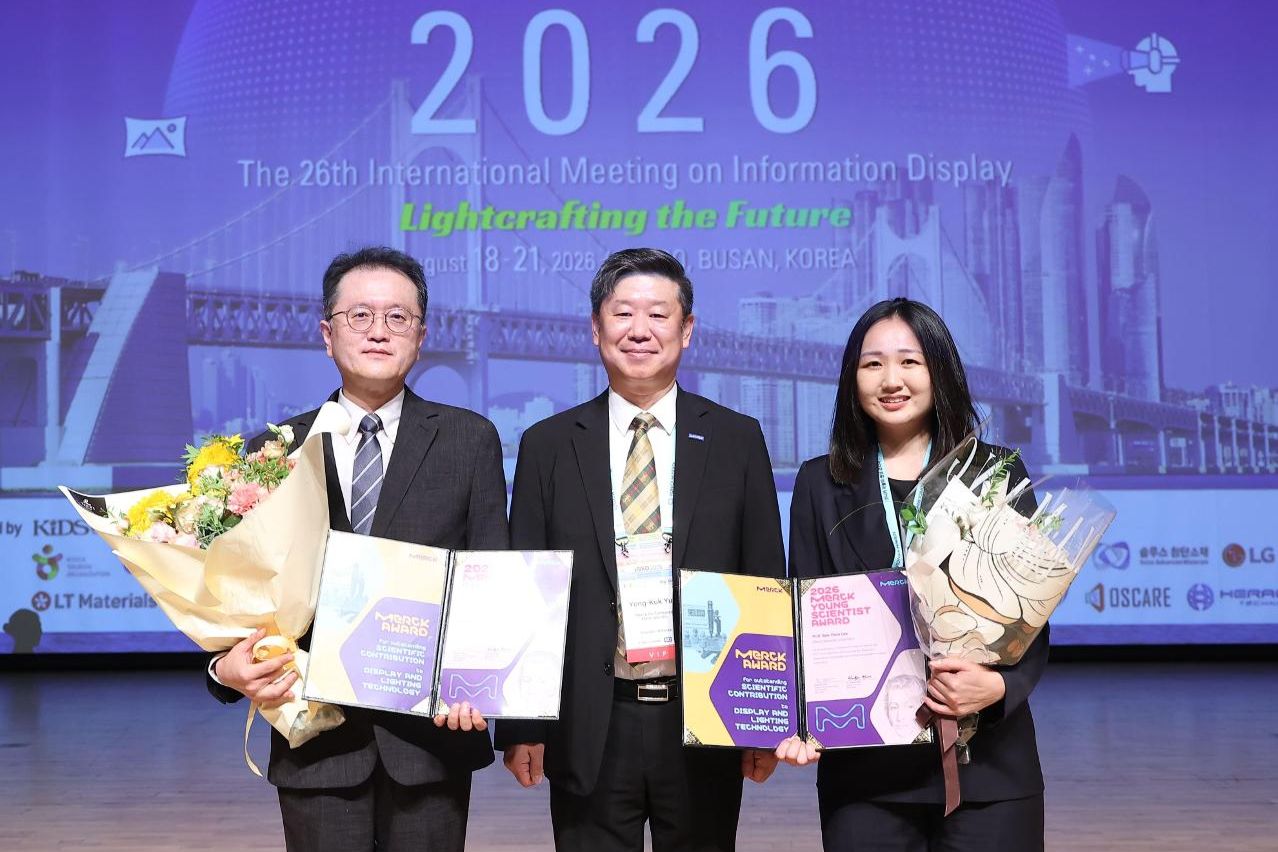
Two Korean professors have been honored by Merck for groundbreaking research that could redefine display technology in the age of artificial intelligence. The prestigious 2026 Merck Award was bestowed upon Kim Hak-rin from Kyungpook National University, recognizing his advancements in display optics based on liquid-crystal materials.
His research spans active polarization-switching optics, geometric-phase optical devices, holographic imaging, and extended reality display optics, with a particular focus on next-generation glasses and holographic displays. Kim expressed his intent to contribute to maintaining Korea's global competitiveness in immersive and spatial display technologies.
Lee Soo-yeon from Seoul National University was awarded the 2026 Merck Young Scientist Award for his pioneering work on oxide thin-film transistor devices and circuits, integral to next-generation displays and semiconductor technologies. His research encompasses oxide TFT reliability, display-driving circuits, device-aging compensation, and low-power neuromorphic systems, advancing on the groundwork laid by his earlier work on display technology.
Written by urgent.news from The Korea Times's reporting — not their text. Machine-written — may contain errors; check the original before relying on it.