Meme magic: how a crude Chinese animation reshapes country’s viewing habits
A crudely made animated film has emerged as an unexpected cultural flashpoint in China, sparking debate over how memes and online virality are reshaping audience perceptions of what is worth watching. Niu Lai, or The Arrival of the Ox, premiered in China on August 5, following a young calf’s dreamlike journey to becoming a warrior. Its rudimentary visuals quickly invited ridicule: snakes resemble…
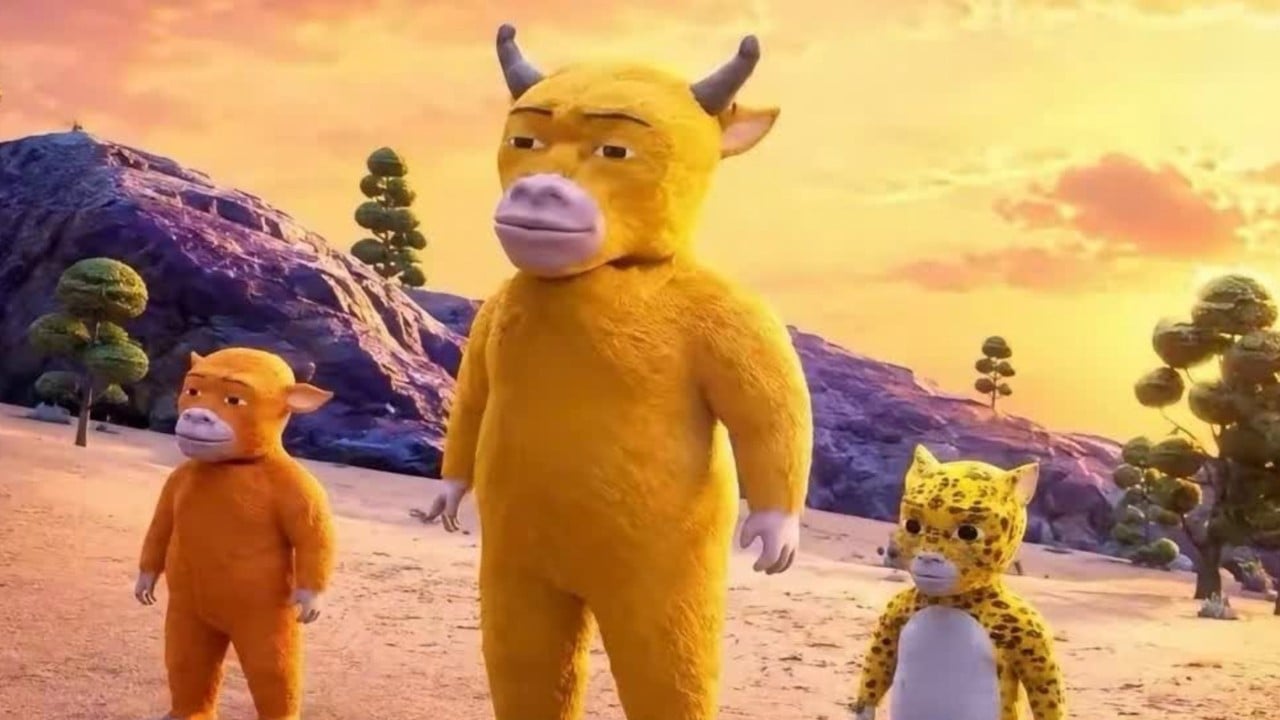
A simple animated Chinese film, Niu Lai or The Arrival of the Ox, has unexpectedly become a cultural phenomenon, prompting discussions on how memes and online trends affect what people choose to watch. The film follows a young calf's imaginary adventure as it transforms into a warrior. Despite its rudimentary animation featuring peculiar visuals like snake-like strips and simple yellow blocks representing grass and leaves, the movie initially attracted very limited attention, earning just over 7,000 yuan (US$1,000) in its first ten days at the box office with an average ticket price of 26 yuan (US$3.6).
However, the film underwent a transformation when audience members captured and shared in-cinema recordings, with the bizarre plot and crude visuals quickly becoming memes on social media platforms in mainland China. This unanticipated shift in perception led curious viewers to purchase tickets, and by August 18, Niu Lai had generated over 21 million yuan (US$2.9 million) in revenue, with a projected total box office of 135 million yuan according to the Chinese ticketing platform Maoyan Professional.
Director Xin Yumeng, along with his mother Sun Lifang, spent five years developing the film, only to find it gaining momentum as a form of social currency, offering a shared experience and an easy conversation starter. Xin described Niu Lai as a "healing family film" emphasizing the importance of family bonds and facing challenges with courage.
His mother, who self-taught in screenwriting and composition, collaborated with Xin, who had a background in landscape architecture and learned animation techniques independently without AI assistance. Ivy Yang, a specialist in cross-cultural communication, explained that Niu Lai's success is partly a result of people's newfound appreciation for handmade, naive, and even absurd content, which resonates with the current cultural climate.
Interestingly, in-cinema recordings, usually considered copyright infringements, have become a driving force behind the film's visibility. This practice has sparked legal debates, with experts cautioning that uncertainty does not imply permission. Qiancengmian, a Beijing-based film producer, emphasized that the film met content and technical criteria, as Chinese theaters undergo rigorous censorship reviews.
Yang suggested that the film's popularity is more about audience empowerment, with viewers willing to spend on films they enjoy, even those with imperfections. However, some critics, like photographer Lucky Ye, argue against patronizing such movies, suggesting that supporting them might reward "bad money" and discourage creators from pursuing quality work.
Despite the backlash, Yang intends to watch Niu Lai, primarily for the social experience and observation of audience reactions, rather than focusing on the film's artistic merit.
Written by urgent.news from South China Morning Post's reporting — not their text. Machine-written — may contain errors; check the original before relying on it.