LVMH und Kering: Der chinesische Luxusmarkt kriselt
Für Konzerne wie LVMH oder Kering war China über Jahrzehnte ein sicherer Wachstumsmarkt. Doch die Finanzpolitik aus Peking macht reiche Chinesen vorsichtiger und belastet die Luxusmarken.
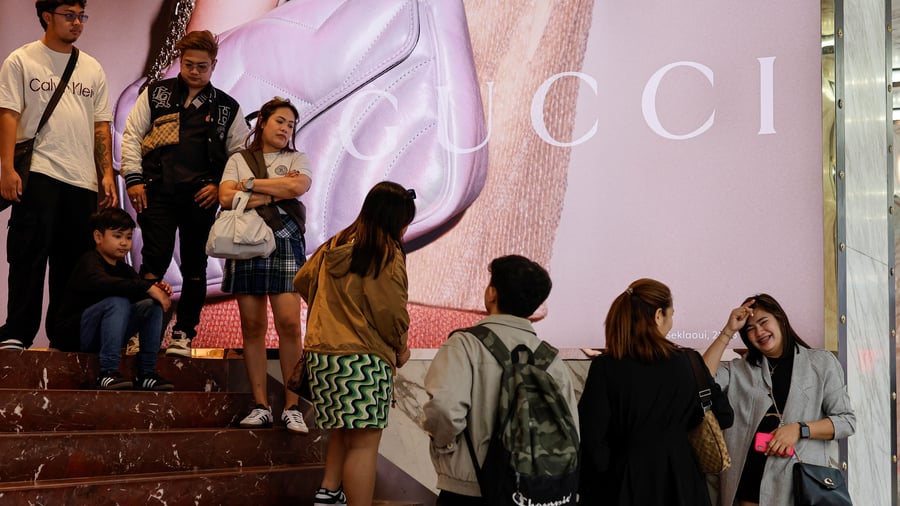
LVMH und Kering report that luxury market sales in China have fallen for the first time in recent months. This decline is attributed to Beijing's increased tax on foreign-held wealth, which dampens the spending of China's wealthiest individuals. Chinese consumers are becoming more cautious due to a weakening perception of wealth and stricter tax regulations on income-rich consumers.
International luxury brands such as Louis Vuitton, Dior, Gucci, Bottega Veneta, and Balenciaga from LVMH, and Hermès, Chanel, and Prada from Kering, all experienced double-digit sales declines in July, according to three market research firms surveyed by Bloomberg. Hermès switched from growth to decline, and Chanel and Prada saw their growth significantly weaken.
China used to be the growth engine for the luxury industry, but competition for wealthy customers has intensified. At the same time, middle-income consumers are cutting back on spending amid economic slowdowns in the country. With low real estate prices, affluent Chinese have increasingly shifted their money into stocks and other financial assets.
Beijing recently tightened controls on cross-border stock trading and encouraged citizens to remit billions of dollars to foreign-held assets and investment profits. Wealthy Chinese feel the impact through increased caution among high-net-worth customers and a stricter tax environment for income-rich consumers. Market operators report growing apprehension among their VIP clientele.
The decline in China is felt by Asian casino operators as well. In Macau, the gambling capital, casinos reported stronger-than-expected revenue declines in June and July. Rich gamblers bet less and visited the casinos less frequently. "We observe a certain correlation between capital market developments and luxury sales over the past two years," said Robert Wu, CEO of the Shanghai-based market data and research company Baiguan.
"Earlier, this correlation was less pronounced because a large portion of wealth was tied up in real estate." Stella Lin, a 37-year-old financial product salesperson in Shanghai, said the slump has led her to completely stop voluntary spending. Her investment portfolio, which accounts for more than half of her invested capital, has fallen sharply, so she has not purchased luxury goods in recent months.
Instead, she spent most of her money on the stock market during summer vacations, attending VIP events, and buying designer bags and clothes. She had previously spent at least $15,000 a year on luxury products. "In the past two months, I had no interest in buying anything from a fancy store. When I will spend money again? That is something you have to ask the stock market - if it recovers."
However, luxury brands faced additional challenges in July with extreme heat, heavy rainfall, and an increase in outbound travel during the summer vacations, which further strained customer frequency and sales. August will be a crucial test for consumer confidence. This week, the Chinese Qixi Festival, also known as Chinese Valentine's Day, takes place and traditionally one of the most lucrative occasions for luxury spending.
If the brands do not achieve positive growth even with this adversity, it would be a clear indication of a genuine slowdown, said Roizen of Foresight Performance Partners. More: Rich in China - everything, but no self-entitlement!
Written by urgent.news from Handelsblatt's reporting — not their text. Machine-written — may contain errors; check the original before relying on it.