Kanun Melayu dahului model Eropah ratusan tahun, titah Tunku Azizah
Tengku Ampuan Pahang bertitah Hukum Kanun Melaka dan Hukum Kanun Pahang cabar andaian raja Melayu memerintah secara mutlak tanpa terikat undang-undang.
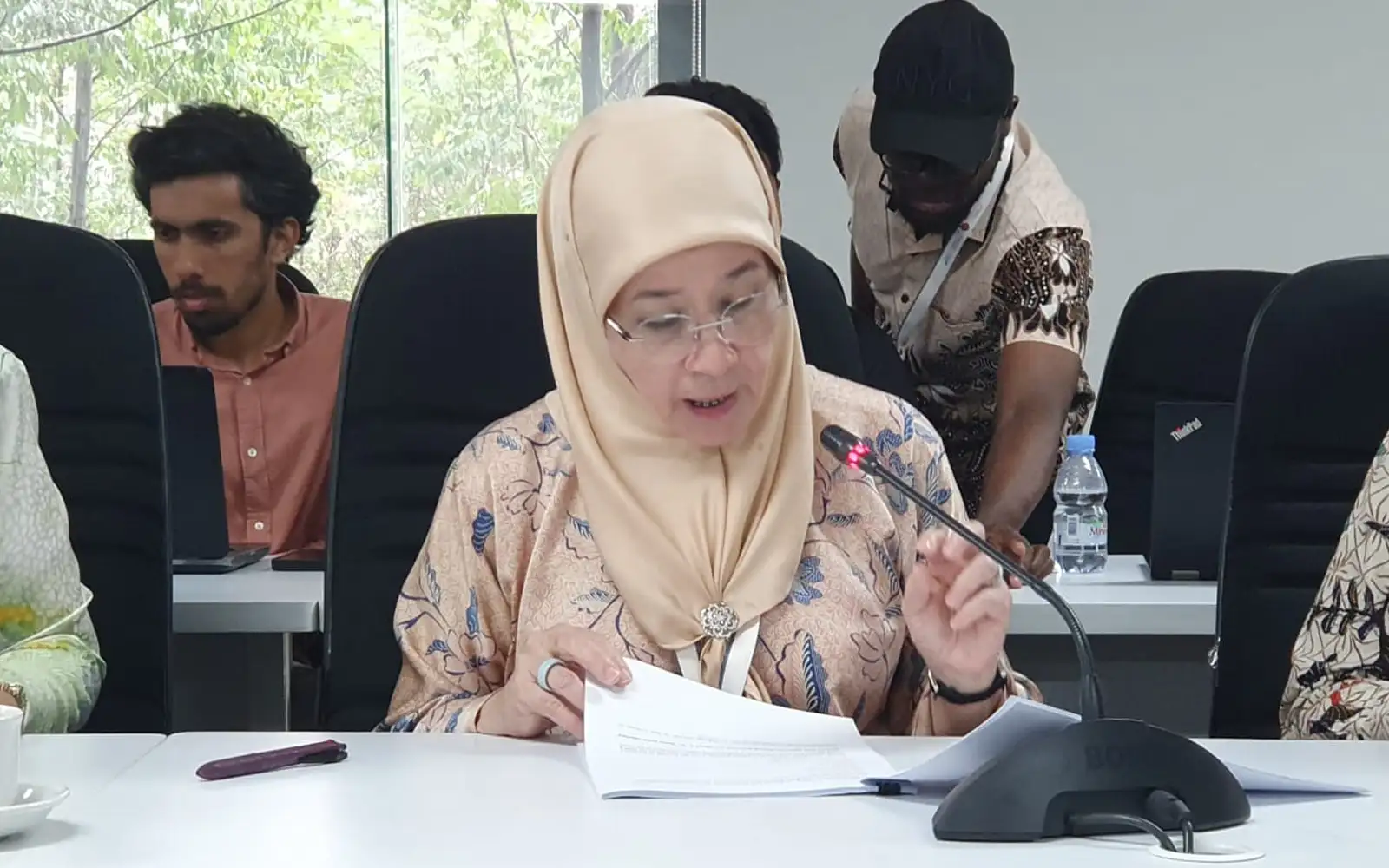
Her Majesty Tunku Azizah Aminah delivered a speech at the Manuscripts and the Diversity of Islam(s) in Southeast Asia conference in Indonesia, highlighting the significance of the Melaka Kanun (HKM) and Pahang Kanun (HKP) legal manuscripts. These documents, dated centuries ago, reveal that the Malacca Sultanate had established a well-structured governance system long before the introduction of European models, said Her Majesty.
The manuscripts, previously considered ancient legal codes, encompass matters such as defining sovereignty, political power, government roles, and justice, as well as public welfare. The texts delve into the Sultan's position, the roles of ministers, judges, and nobles, justice administration, maritime and trade powers, and the relationship between Islam, law, and tradition.
This comprehensive approach forms a governance art, she emphasized. Her Majesty noted that these texts not only addressed legal matters but also formed a comprehensive governance system. The speech, titled "From Absolute Monarchy to Constitutional Monarchy," questioned whether the Malay monarchy had ever been 'absolute' in legal terms without any limitations.
Could the monarchy's rule have always existed within a normative framework, limited by Islam, law, tradition, justice, roles, and responsibilities? Her Majesty stressed that this does not mean modern governance resembles the old kanuns, but rather the emergence of an organized king, rule based on law, accountability, justice, and institution values did not suddenly appear along with European governance instruments.
The conclusion is that HKM and HKP formed a consistent political power structure based on Islamic political thought, written in Malay through Jawi script. She also presented HKP as evidence of the continuation of Melaka's legal and political traditions in Pahang. Her Majesty pointed out that Sultan Muhammad Shah, son of Sultan Mansur Shah of Melaka and Pahang Queen Onang Sari, established the Islamic Malacca Sultanate in 1470, more than 40 years before Malacca fell to the Portuguese in 1511.
This meant that Melaka's legal and political traditions had already existed in Pahang during Malacca's reign as a Sultanate. Sultan Abdul Ghaffar Muhyiddin Shah later maintained, purified, and codified this tradition into HKP. Her Majesty clarified that HKP is not merely another legal code, but a continuation of HKM in Pahang. The document also shows how this tradition has persisted through the ages, with a complete Pahang manuscript returned from Patani in 1993 and 1999, and another discovered in March this year, currently under preservation.
The kanuns have also been recognized in Brunei, Riau, Sambas, and Perak, underscoring the broader Malay-Islamic governance and legal tradition. Her Majesty concluded that before questioning the origins of our modern governance, we should first recall the existing governance tradition here.
Written by urgent.news from Free Malaysia Today's reporting — not their text. Machine-written — may contain errors; check the original before relying on it.
This story
This is one outlet's version. Read the fullest account.
- Kanun Melayu dahului model Eropah ratusan tahun, titah Tunku Azizah freemalaysiatoday.com