Judge says ATF cannot decide when a piece of 3D-printed plastic legally becomes a firearm
The permanent injunction blocks enforcement of those provisions against Defense Distributed and current or future members of the Second Amendment Foundation. It covers the company's M1911 80% frames, G80 build kit, unfinished receiver, and grip module. Read Entire Article
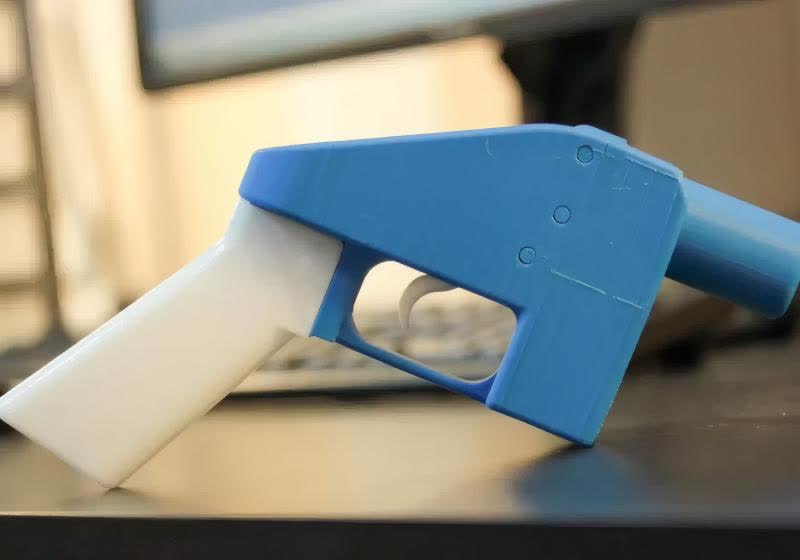
A Texas federal judge has struck down key aspects of the ATF's 2022 "ghost gun" rule, deeming sections of it unconstitutional. The regulations in question expanded the definitions of "firearm" and "frame or receiver" to encompass specific weapon kits and partially finished components. This expansion compelled sellers to acquire federal licenses, incorporate serial numbers, maintain sales records, and perform background checks.
The permanent injunction halts enforcement of these provisions against Defense Distributed and current or future members of the Second Amendment Foundation. The decision carries significant implications for 3D-printed firearms, as the rule stipulates that a component, whether printed, forged, cast, extruded, or unmachined, may transform into a regulated firearm once it is "clearly identifiable" as an unfinished firearm part.
The court ruled that the ATF's definition fails to establish clear criteria for determining when an item crosses the line into becoming a firearm, leaving individuals uncertain about the regulation's scope. The judge also found that the rule's restrictions violate the Second Amendment by restricting access to components necessary for building or repairing personal firearms.
The government's arguments drew parallels to historical colonial laws requiring gun barrel safety testing and rules governing gunpowder storage and transportation. However, the judge dismissed these comparisons, arguing that the ATF rule's intent is to aid law enforcement in tracing firearms and preventing prohibited individuals from acquiring them.
The rule's constitutionality was upheld by the Supreme Court in a 7-2 decision last year, focusing on the ATF's statutory authority rather than the constitutional issues addressed by the judge. The ATF maintains that individuals can still manufacture detectable firearms for personal use with a 3D printer or similar tools, generally without the need to serialize them unless operating as a business.
The agency estimates that approximately 45,240 privately made firearms were recovered from potential crime scenes between 2016 and 2021. The legal battle over 3D-printed firearms has a lengthy history, with Defense Distributed previously facing a settlement challenge in 2018, which was subsequently declared invalid by a federal judge.
Written by urgent.news from TechSpot's reporting — not their text. Machine-written — may contain errors; check the original before relying on it.